Why doesn’t somebody buy Godot a watch?
“The revolution almost started today, but it ceased as quickly as it began due to the discovery of the 1.3511 trillionth digit of pi—it was Three this time, and we all congratulated him for being the last in the longest string of continuous digits identified, all the while knowing full well that pi was infinite and that Three would not be the “last” digit for long—but we celebrated, as per usual, congratulating each other on being masters of the universe—jokingly, but with a hint of truth, as was the norm—letting aside for the day all the qualms with the Negatives who, having no parallel conception of pi or e or any of our other numerous (pardon the pun) successes, could not be trifled with on a day such as this; no, the revolution would start tomorrow in the celebration’s wake, the dissonant relationship between ourselves and the Negatives reemerging as the talk of the day, given fuel by our recent success, and we would again unite ourselves with the resolution to rid our ordered, rational world of our negative counterparts with the claim that they were not needed in pure mathematics—that everything could be explained and calculated using us only—and that they should be banished to another category of numbers all together, perhaps grouped with the Irrationals or the Imaginaries or even given their own category, all the while never quite realizing as a group the irony of us as Rationals acting with such blatant illogicality towards our fellow numbers.”
Our assignment for my English class today was to write a 250+ word sentence using only one semicolon (if necessary). Fairly easy ‘cause I use a lot of dashes in my sentences anyway. I think I might use this as a premise for my second long story for the class, but I’m not sure.
U Kant Touch This
This is what happens when Claudia is:
1. sick
2. doesn’t want to write essays
3. doesn’t want to do math homework
4. is bored because of the previous two points
5. herself
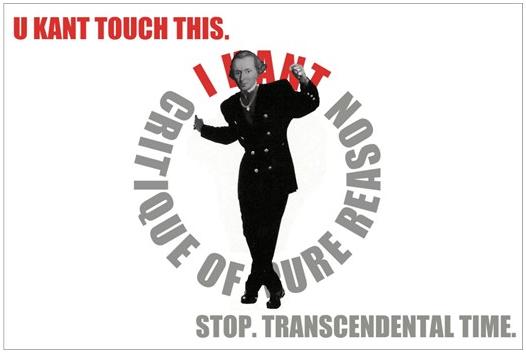
Apologies to Kant. And to Mr. Hammer.
If you want to eat an apple pie, you must first consume the universe
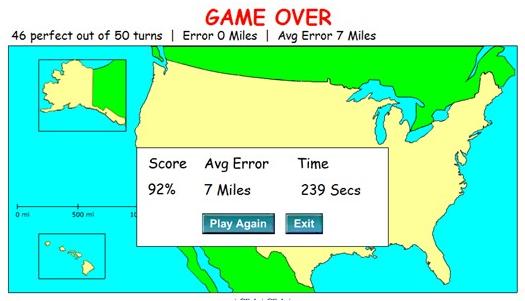
http://jimspages.com/States.htm
Getting Nebraska “we’re the anchor of nowhere” state as the first one to play was enough to throw my score so that I had 7 error miles left at the end.
Also, Pennsylvania can suck it. I can’t remember the other two I screwed up. I think I put Rhode Island a few miles off or something.
The Count of Monte Carlo
Haha, um, yeah.
What would happen if large sample sizes were as desired as large…well, you know.
Yes, I realize I can’t draw. Deal with it.

Aren’t clones technically carbon copies?
Haha, rock on. This list is very helpful, and funny in places.
A Comprehensive and Totally Universal Listing of Every Problem a Story Has Ever Had by Douglas A. Van Belle
1) Wrong Starting Place: Most good fiction doesn’t start in the beginning, it starts in the middle. This is particularly true for short fiction. Readers should feel like they have been dumped in the middle of a car chase. Even as they cling to the dashboard and frantically stomp their foot on the imaginary brake that has been installed on the passenger side of every vehicle built in the Post-Starsky and Hutch era, readers should be looking for clues to explain why in the hell the idiot writer in the driver’s seat is racing through town at breakneck speed. This doesn’t mean you should always start with a punch in the face, a kick to the testicles also works, but at least half of all not-ready-to-publish stories start in the wrong place. See also Problem 10.
2) Telling Instead of Showing: Telling me that little Johnny is bored is extraordinarily boring. It’s even more boring when I have to suffer through him thinking about how bored he is. Mentioning the distant and distracted look on his face as he methodically tears a gum wrapper into a pile of tinier and tinier bits of silver and green confetti, that’s way less boring.
3) Dead Dialog: Most corpses don’t do anything, at least not anything that is all that interesting. They rot and decompose and stuff, but they don’t act. Live people do things, they try to accomplish things, they act and fiction is all about action, about pursuing a goal, doing something. Similarly, dialog is much more interesting if it is alive. It should do things beyond bloating and floating about the bay. It should imply action, hint at motives, betray prejudices, push others to react and it should do several of those kinds of things at once. Most of the sentences you put between quotes should equal at least three sentences outside of them. If you can take the dialog out without adding three sentences of narrative, you probably don’t need either the dialog or the narrative. The variety of things that dialog can do is as vast as the variety of things that a pre-deceased person can do, but the specifics are nowhere near as important as the fact that good dialog has to do something.
Corollary 3.1: Dialog is inherently superior to prose. If you can replace three sentences of narrative with a single line of dialog, you are morally obligated to do so. In fact, if you don’t you will go to hell, directly to hell without passing go, and it will be one of those really bad levels of hell where all the fiction is written by accountants.
4) Undead Dialog: In certain circumstances, some corpses actually do things, but even when they shuffle about the town, dialog really isn’t a strength of the reanimated and writers should always be vigilant patriots in our struggle against the armies of darkness, and the French. Just because Zombies (and the French) are constantly mumbling “Brains, Brains, Brains” it doesn’t mean that their every single utterance needs to be quoted. There are lots of mundane things a character would say that a reader really doesn’t need to hear. Stories are supposed to capture the exceptional moments, not the mundane, and dialog should reflect that. See also Problem 11: Mistaking Motion for Movement.
5) Impersonal Dialog: Speech is the reflection of a person’s soul. Souls are kind of pink and squishy and full of crap. Therefore dialog should be pink and squishy and full of crap. Or maybe that’s the large intestine. Whatever. The point is that dialog should be eviscerating, but in a good way. It should expose the guts of your character. In addition to the content of what is said, word choice, use of contractions, and phrasing should combine to make it obvious who is speaking even before the reader hits the he said, she said part.
6) Impersonal Narrative: The narrative prose should be just as personal as the dialog. Is it a little girl’s frilly bedroom or did someone puke sugar and spice all over everything? The narrative must have a personality. It doesn’t have to be a personified narrator. In fact, it should almost never be a personified narrator. Narrators that are characters in and of themselves should probably only be used if your target audience is people who can’t wait for their next colonoscopy. Still, no matter what POV choices you have made, even the most distant of third-person narrators must represent the story by choosing the details that are perceived and those choices embody a personality. That should carry forward into hints of a personality in the way things are described, particularly the choices of descriptive words. See also Problem 7 and Problem 8.
7) Point of View is Like a Box of Condoms: There is no such thing as a small one. I could have used Starbucks’ coffee sizes for that analogy but Grande, Venti and Exxon Valdes just don’t quite work as well as Snug Fit and Magnum. As fair warning, even though bodily fluids are not explicitly mentioned here, they are clearly implied by pointing out that the whole purpose of a condom is to keep everything contained so that both the naughty nurse and the kind-hearted gladiator can focus on what really counts. Point of view keeps the story contained so both the writer and the reader can focus on what really counts, getting the story across. However, no matter whether your story needs a Magnum (Third Person) or a Snug Fit (First Person) point of view, how you use your point of view is far more important than how big it is. Point of view failures are usually some kind of loss of containment, such as when the narrative voice is first person but the narrative perception starts slipping off to places where the narrative character could not carry the reader or a third person POV that usually stays outside on the shoulder of characters but sometimes jumps inside the head for a first-person peek.
8) Fairydancing the Point of View: Contrary to popular belief, there are as many types of point of view as there are marketing schemes for Disney merchandise. First person should restrict your narrative to the POV character’s head but that still leaves 1768 variations of narrative and voice to play with. Are perceptions described with the character’s voice, or a neutral voice? Can the reader’s attention be brought to the things the character sees, but doesn’t notice? Second person isn’t a point of view. It is a form of intellectual masturbation. Third person can sit on a character’s shoulder; it can sit above or outside the scene; it can see the thoughts in a person’s head; it can be kept out of the skull altogether and limited to interpretations of expression, voice and other clues; it can be nailed to the moment of the narrative; it can reach back into the past for things that inform that moment. Third person is big and versatile, totally Magnum, but it is not a fairydance. No matter how you decide to use point of view, you must pick a set of rules to write by, make those rules clear to your reader and stick with them. Short of a total point of view failure, the most common problem that is inconsistencies within a point of view or vague shifts that disrupt a reader’s immersion.
9) Second Person Point of View: You know you shouldn’t. You want to do it but you know you will go blind.
10) Chronicling: If I wanted to plod through something step by step by step by step, I’d go to work once in a while. Authors get to fuck with time so do it. Skip the boring bits. Skip the bits that aren’t important and just hit the high points. If his choice between walking, driving or riding the bus isn’t critical to the story, why in the hell am I reading about it? Connecting this back to Problem 1, do you really need to start with the pizza order and march us through the thirty minutes or less to the knock on the door? Or can you just jump to the naughty part, give us a glimpse the delivery uniform tossed on the pizza box and end it with a very very big tip for the tussled pizza delivery girl/boy/donkey?
11) Mistaking Motion for Movement: I call this the Jean-Claude van Damme problem. Physical motion (including all the detail in the fight or the sex) only matters in the way it serves to move a story forward.
12) Filling the Negative Space: In many ways, writing is like a bowel obstruction: less is better than more. Negative Space is key here and it does two things. First, negative space is an absence of distractions that, by its emptiness, focuses the reader’s attention on the details provided. This enables the reader to imagine all of the unspoken, or I guess unwritten, parts that are implied. You can offer a thousand details about the fat police officer, but simply noting how much of his belly has erupted up and over the top of his belt says everything that needs to be said. Leaving the negative space unfilled also allows the reader to personalize the story in ways that you could never manage with details. The image that the reader projects into the negative space will be intimate. For the reader, the minimalist description of the fat cop will be fleshed out with the insidious characteristics of the Nazi asshole who wrote him/her/it a ticket for doing 58 in a 55.
13) Skinny Story Stuck in a Fat Story’s Body: Sometimes, especially when it comes to the neighboring passengers in the testicle-strangling seat configuration that QANTAS calls economy class, too much is just too much. Granted, we all want a bit of fat on our stories. After all, boobs are something like 90% fat and you can’t walk past a newsstand without noticing just how incredibly important boobs are, but for fiction, particularly short fiction, it can be extremely hard to find the beauty in the Rubenesque. Starving a story of detail can sometimes be a problem, but Annortextia is far less common than Obestiality and it is almost always better to err on the side of an extra bit of liposuction to make sure the fat you choose to keep is creating sexy curves exactly where you want them.
14) Characters Ain’t People: Characters are the shoes that readers want to slip on for a vicarious stroll through the clusterfucks of life that no real person would actually want to step into. Characters are relationships. They are the focal points of the push and pull of all the things that drive a story but they aren’t actually people. If you think of your character as a real person, it will be far more and far less than a character should be. If your character comes across as a whole person it will be too much. It will be too full and there will be no empty spaces left for the reader to imagine what it would be like to be the person the character is supposed to represent. If your character comes across as a real person, it will also be too small. If the reader is going to slip inside the character’s skin, that skin needs to be at least a bit oversized. The character needs to have that little extra that allows it to break from the ties that bind real people.
15) Exclamation Points are for Soft-Porn Only! This should be obvious! The damn things even look like little penises! This is related to Problem 16!
16) PLEASE, NO MORE HIGH SCHOOL SHAKESPEARE: There ought to be a law against high-school productions of Shakespeare. Seriously, starvation and war and such are problems, but can we get our priorities in order and get the UN do something about 17 year old King Lears? It boils down to the fundamental teenage definition of drama as equivalent to volume. If you shout, it must be really dramatic, and even without exclamations points you can turn the volume of your prose up well beyond what that punk with the bleeding ears can manage with his iPod. A general rule of thumb is that writers should offer a rude gesture in response to anything offered as a general rule of thumb, but authors might also want to consider the general rule of thumb that the form of presentation can only enhance the nature of what is being presented. Therefore, if the what behind the prose isn’t inherently dramatic, screaming it will only serve to make it even more not dramatic.
17) Are You Sure You Know How to Use a Semicolon? Seriously; are you sure? Most writers who use them wouldn’t use them if they knew how to use them. I use them all the time, but I’ve got issues; wearing a red shirt when we beam down to the planet kinds of issues.
18) It’s Not a Yarn: Some asshole once called a fictional tale a yarn. Bastard. Yarn is singular, one dimensional and fiction should be macramé. Fiction should weave, tangle, knot and twist multiple stories together into a whole that is greater than the parts. If you have A story in what you’ve written, it probably isn’t enough to carry even a thousand words. Two stories woven together, layered on top of each other and pulling the characters in different directions can carry a reader much farther. Even in the context of short fiction complexity is important and it usually takes two or three stories and a couple interesting ideas stirred together to really get it done.
19) Used Clones, Cheap: Exactly how many times do you think we need to suffer through another pale and flatulent imitation of that really cool story/novel/dodecadology? Some stories have been told and retold a thousand times. Unless you’ve got a really cool twist to add, no one wants to read about alien invaders being defeated by the common cold, or a waif becoming the wizard’s apprentice, or someone agonizing over computers/zombies/clones/replicants and the nature of humanity. Surprisingly, finding lame echoes of old stories in the slush pile isn’t nearly as common as finding a neat, twisty and subversive little idea that is buried under a buttload-and-a-half of the other problems on the official list.
20) Horrible People Die: Great. So what? Other than the fact that “He needed killin'” is legally defined as pre-emptive self-defense in Texas, killing the evil bastard really doesn’t make for very good story telling unless it provides a tweaky kind of solution to Problem 19 or Problem 21.
21) Man of Teflon-Coated Titanium: A lot of stories fail because they either offer up the wrong lead character or the characters exit the story as copy-protection-be-damned digitally-perfect replications of how they entered. This is a particularly big problem for the Graphic-novel collectors turned writers who want to do Superman but better. I don’t have a good superhero example, but there is a reason Glenn Close’s character wasn’t the lead character in The Devil Wears Prada. Partly because it was Meryl Streep and not Glenn Close in the movie, but most of the reason that the evil bitch running the magazine couldn’t be the lead character was because she doesn’t evolve during the story. That other girl does. Not the one who was already working at the magazine, she does change a little but the other girl who shows up and gets that new haircut and then did the Get Smart movie. That girl changes the most, she does the most (See dead/alive problems 3 and 4) and that’s what makes her the right lead character.
22) Burning Epiphanies: When the protesters are burning epiphanies in the streets it probably means that you put just a bit too much faith in your spell checker.
23) Totally Crap Spelling: Nuff said.
24) The Gippetto Syndrome: Most writers who have found the fortitude needed to throw their beloved work into the whirling knives of the rejection-go-round of doom have usually also managed to stumble their way past cardboard characters. In some ways, however, little wooden puppet characters who desperately wish they could be a real boy are worse. The rule of thumb (See Problem 16 in regards to rules of thumb) for characters is that something about what makes them unique should also be what puts them in the situation, conflict, dilemma that they must engage within the story. Usually, intentionally imposing that condition upon characters makes it impossible for them to be bland containers for dialog and actions, and it makes it really, really hard to write them as little wooden effigies (see Problem 22) that mimic a real character. Again, like Problem 21, this is surprisingly less common in the slush pile than might be expected.
25) Other: This isn’t really a problem, but I had to put this category in here just to guarantee I didn’t get sued for claiming it was a comprehensive list and then having some asshole find something I didn’t cover. Other does exist. Every once in a while a perfectly good story just doesn’t do it for an editor, but that’s not a fixable thing. There just isn’t much you can do about getting stomped on because of something in the other category, except for sending it somewhere else.
Pixel Philosophers
Alternate title: “Things Claudia Does to Avoid Homework/Cleaning Her Room/Death by Boredom/Drugs”
So this morning I woke up and put on my new snazzy David Hume shirt. After playing Rock Band for a bit, I sat down at about 4:00 with the intent to do a quick sketch of Hume in Flash, just to check my skills how much I suck.
I just finished. It’s 9:30.
FRUIT OF MY LABORS:

Yes, I know the shirt and the wig suck (I forgot to shade a few places…shut up, it’s the first time I’ve drawn ANYTHING in a long while, especially in Flash). But look at that lace neckerchief…damn.

Now he’s glowing with the help of Photoshop.
Sometimes…the only thing you can do is blog.
So remember Wordle? I did it with the titles of all the songs I own. Here are the most popular words in my music library:

To Hume am I Speaking?
How FREAKING BADASS IS THIS SHIRT?!

It’s mine. I love it.
Deconstructing Pi
Today I did something fun (and something that crashed SAS at least 10 times): I decided to deconstruct pi to the 1 millionth digit. Why? I wanted to see if the numbers 0-9 appeared nearly uniformly throughout this fraction of such an infinitely long number. I wanted to test the hypothesis that a large enough sample size with the instances seemingly “random” would produce a much less leptokurtic (bell curve-shaped) distribution.
I also like the word “pi.”
STEP BY STEP PROCESS!
First I went here to get the first million digits.
Then I used the handy-dandy CTRL-H “find and replace” command to put spaces behind each digit so that SAS could read each one as a distinct piece of datum.
So after SAS crashing on me like 4 billion times (it took awhile to be able to input the most amount of data but not have it flip out—no seriously, this took like three hours), I finally got all the data into SAS and analyzed it. Here are codes/output!
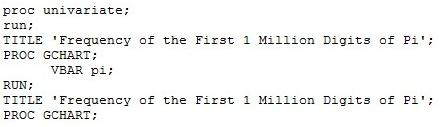
As you all know, the mean of numbers 0-9 is 4.5. When n=1,000,000,the mean of all this data is 4.499934, about as close to 4.5 as you can get. And there’s practically no skewness, either.
Here’s the bar chart:

And, appropriately, here’s the pie chart:
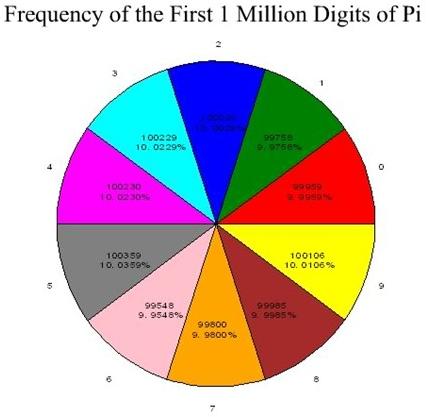
How freaking GORGEOUS is that uniformity?! I mean, LOOK at it!
Breakdown by smallest to largest frequency:
6: 99,548
1: 99,758
7: 99,800
0: 99,959
8: 99,985
2: 100,026
9: 100,106
3: 100,229
4: 100,230 (ONE instance difference between digits 3 and 4! OMG!)
5: 100,359
The power of the large sample size, my friend. Cherish it. Admire it. Worship it.
I’m done here.
Survey Country
1. Do you smoke mary-jane?
Do what now?
2. Have you kissed anyone is the last two weeks?
Yes indeed.
3. Who’s the last person that came to your house?
Matt?
4. Who lives in a pineapple under the sea?
SBSP!
5. What is the last thing that you drank?
Milk
6. What time did you get up today?
7:30
7. Elvis or James Dean?
Elvis
8. Who is one person you can’t stand from grade school?
I remember John being extremely obnoxious
9. What grade did you get in Algebra
Hahahaha….haha…C-.
10. Who did you kiss last?
Aaron!
11. Is there anyone you would like to fight?
Nope
12. Do you like someone right now?
Hell yes
13. What are you doing right now?
Watching Futurama
14. What were you doing before this survey?
Rock Band!
15. Who did you dance with last?
No idea
16. Who is your best friend(s)?
Nick, Sean, Matt, Maggie
17. Song playing?
None, surprisingly
18. If you could have one wish what would it be?
To live back in the late 1600s-early 1700s so I could date/stalk Leibniz
19. What color are your underwear?
White
20. Do you know what tofu is?
It’s tasty
21. Have you ever eaten it?
See above
22. Do you know what a colonoscopy is?
Yup
23. Have you ever had one?
Haha, I’m glad this question wasn’t, “have you ever eaten it?”
24. Do you want to go back to high school
Nope
25. Who is your arch-enemy?
Don’t think I have one
26. Whats the most attractive thing on the same sex?
Boobies are nice, but only if they’re small.
Hair’s good, too.
27. Do you or have you ever read Cosmo?
Haha, that was a fun night at Maggie’s
28. Have you ever watched the Britney Spears movie “Crossroads”?
Nope
29. Do you listen to Lindsay Lohan?
Nope
30. What do you think of Paris Hilton?
Meh
31. What do you think of Justin Timberlake?
I like him, he’s cool
32. Britney or Christina?
Neither or both, don’t care
33. Do you want platinum or gold for your wedding band?
Don’t care
34. Have you ever paid to have your eyebrows waxed?
Nope
35. What did you do yesterday?
School stuff
36. Are you bored right now?
Yeah
37. Have you ever flashed someone?
Do you know me?
38. How many children do you want to have?
NONE
39. Who did you ride in a car with last?
Aaron
40. Republican or Democrat?
Democrat
41. What’s the oldest that a man can be and still be sexy?
293. ‘Cause that’s how old Leibniz is and he’s still a sex pot.
42. Do you think that the tobacco companies should pay for people’s medical bills?
Nope
43. What scares you the most?
Failure
44. What makes you happy?
Success
45. If you could have one person in your bed tonight, who would it be?
LEIBNIZ!
Top 10 influential songs
Hello again! Following yesterday’s blog, I realized that there are also quite a few songs that will stick with me for the rest of my life. Unlike all the books, however, all of these will stick with me because of their emotional impact. Most of these are on here because they remind me of the circumstances in my life surrounding the time I downloaded them (but they still sound freaking amazing, too). There are a few, though, that just rock my world ‘cause they’re so cool sounding. Here we go!
1. O Magnum Mysterium – Morten Lauridsen
This reminds me of the end of spring semester 2007, when I was kind of going through my own little enlightenment period of my life. Always fun to play in a pitch dark room at volume = 100%.
2. Nothing Else Matters – Metallica
Reminds me of Spring Break 2008. That’s all you need to know.
3. Life Is Beautiful – Vega4
http://www.youtube.com/watch?v=bR_8m9cvIvg (no embedding and live, but still good)
Another song that reminds me of the end of spring semester 2007. A very beautiful song.
4. Farewell – Apocalyptica
This one’s just badass.
5. Hide And Seek – Imogen Heap
I think I found this song randomly in an iMix one day. The one in the first link is freaking amazing, but the second link is amazing in a different way. Wait till you hear the piano at the end.
6. Summer (Part III) – Vivaldi
Yay.
7. Fix You – Coldplay
http://www.youtube.com/watch?v=jBEYyHGbwto
Sad, sad, sad memories. This is my “I’m depressed” song.
8. Breathe Me – Sia
Listen to this song, then bask in the feeling of hopelessness and loneliness it conveys. This is what I listen to when I feel that way.
Also, Sia rules.
9. Fitter, Happier – Radiohead
This song is creepy as hell, but strangely wonderful.
10. Tannhaeuser Overture – Wagner
Badass.
Top 10 influential books
Hello ladies and gentlemen. There’s this note that’s been going around on Facebook where people list the top 10 books that have influenced them the most, or will stay with them the most. I decided that instead of posting this on Facebook (which I’m beginning to hate more and more), I’m putting it here.
The books I chose I chose because of their impact on me—be that from their emotional impact, their intellectual impact, the story itself, or the style of the writing. I explain in each case. It was hard to choose books that influenced me rather than choosing my favorite books, but I think I did this as unbiased as possible. Plus, the two overlap quite a bit.
Ranked from most influential to…well, 10th most influential, I guess. Haha.
1. Watchmen – Alan Moore and Dave Gibbons
This might be first because it’s the one I’ve read most recently, but it’s also first because it’s freaking awesome. The story’s intense, it’s very intellectual, and the art is superb. Read it!
2. The Monadology – Gottfried Leibniz
No, I’m not just putting this on here because Leibniz is a smoldering sex pot. Despite the “out-there” factor that is so high with the Monadology, the general idea of determinism that he expresses throughout it (and a lot of his other stuff) actually kind of lines up with how I see things.
3. Candide – Voltaire
I FREAKING ADORE Voltaire. This book is very funny if you know what it’s making fun of (hint: pretty much everything). And even though Voltaire makes fun of Leibniz, I still love this book.
4. The Caine Mutiny – Herman Wouk
YAY! This is my favorite book of all time, but it’s also on here because the story is AMAZING. Wouk is very good at building tension (just wait until you get to the actual mutiny; good luck putting the book down). It’s also freaking hilarious in parts.
5. The Chosen – Chaim Potok
I can’t remember when it was I read this, actually—I only remember the plot and the characters that have stuck with me since. This was one of two books that left me crying at the end. Very emotionally impactful. It’s about two Jewish boys, one of which does not want to follow in his father’s footsteps, if you want to know the very summarized plot.
6. The Great Gatsby – F. Scott Fitzgerald
Beautiful, beautiful writing style. I love Fitzgerald’s way of creating a story, and I love Gatsby.
7. On the Beach – Nevil Shute
The premise of this book is very intriguing: it examines a post nuclear war world from Australia’s point of view as the country sits and waits for all of the fallout from the northern hemisphere to drift through the atmosphere down to them. That’s really all you need to know.
8. Crime and Punishment – Feodor Dostoyevsky
Hooray for deeply psychological books!
9. An American Tragedy – Theodore Dreiser
This is a long book and seems kind of boring at the beginning, but once the “tragedy” happens, it really picks up. You get into Clyde’s head and feel his desperation.
10. Age of Reason – Jean Paul Sartre
I read this awhile ago and for some reason I still really like it. Probably because it’s existential.
Helvetica Headache
Well, this was going to be a small simple thing, but, as you know, that never is the case when I’m involved. So I now present to you a semi-objective ranking of the alphabet!
I decided that the letters would be judged according to six factors:
-Uppercase Aesthetic Value (visual) (UAV visual): aesthetic value based on visual appeal of uppercase letters typed in 40 pt. Arial.
-Lowercase Aesthetic Value (visual) (LAV visual): aesthetic value based on visual appeal of lowercase letters typed in 40 pt. Arial.
-Uppercase Aesthetic Value (written) (UAV written): aesthetic valued judged on ease* of written uppercase letters, in the style of Arial.
-Lowercase Aesthetic Value (written) (LAV written): aesthetic valued judged on ease* of written lowercase letters, in the style of Arial.
-Phonetic Aesthetic Value (PAV): aesthetic value judged on ease of spoken sound. Letters with multiple sounds had each sound ranked. The means of these rankings are reported.
-Aural Aesthetic Value (AAV): aesthetic value judged on appeal of spoken sound. Letters with multiple sounds had each sound ranked. The means of these rankings are reported here.
Here is the table of the rankings, followed by a column of the final ranked letters. Have fun (asterisks denote tied values)!

David Hume Looks Like a Buffalo
Hahahaha, check it:

This is a buffalo.
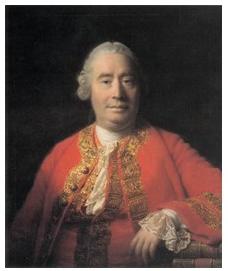
This is David Hume.
They look exactly the same. This is great.
And no, it’s not because he’s a little chunky. It’s his face—he’s got that placid, buffalo-esque look to it. How cool is that?
You know how I feel about the chunky guys, anyway.
“Did you know ’embargo’ backwards is ‘o grab me?'”
So it’s high time I make another “damn, these socks are amazing and I wish I had them” list. Sock Dreams is a place of wonder for me.
Pink and turquoise, since I’ve already got the fuchsia and orange.
Question: who should watch Watchmen?
Answer: everyone should!
For those of you who haven’t read the novel/watched the movie and intend to at some point, spoilers abound in this blog, so I would skip it if you don’t want things ruined.
Things I enjoyed:
- I don’t think I’ve ever been so impressed with opening credits as I was in this movie. I loved the way they went over the whole history of the Minutemen and the masked heroes while rolling the opening credits to Bob Dylan’s The Times They are a Changin’ (very appropriate choice of music, too).
- Rorschach. They did a wonderful job with his character.
- Matching the style to the style in the novel. BEAUTIFUL. That is the only word for it. If you saw any of the previews that featured a scene of Archie (Nite Owl’s ship) rising out of the water, that scene looked EXACTLY like it did in the novel. And so did like 97% of the rest of the movie.
- The story. Even though they had to change the ending in order to prevent the movie from running like 5 hours long, they still did an excellent job.
Things that could have been better:
- The sex scene. It’s like five minutes too long—which means that there’s an at least five minute long sex scene. But hey, it’s Hollywood, so I was kind of expecting it.
- Laurie’s hair. The fact that it looked SO MUCH like a wig ALL THE TIME was really distracting, but that might just be me.
- The costumes. Laurie’s costume was a bit too Spandexy, Veidt’s costume a bit too Batman-esque, everything generally too dark. I know that royal purple and gold neck bands don’t really work with Hollywood style, but I would have liked it if the costumes were more like the scenery and stuck closer to the novel.
- One piece of cut dialogue. In the novel, at the end, after Veidt averts the attention from nuclear war by killing millions of people, he and John talk for a minute and Veidt asks John if he’d done the right thing. This little bit of dialogue was missing in the movie, which was really disappointing, ‘cause I thought it made Veidt a much more believable, human character.
Yay. Go see it.
Waiter! There’s a number in my alphabet soup!
Yay! It’s Aaron’s birthday today!
I bought him jerky and Twizzlers and watched him play CoD and Fallout all day. Good times. I heart him.
Also, survey stolen from Maggie:
1. What is your name?
2. What is your favorite food?
3. What is your hometown?
4. What is your favorite color?
5. What is your favorite movie?
6. What is your favorite drink?
7. What is your dream vacation?
8. What is your favorite dessert?
9. What is one word to describe yourself?
10. How are you feeling right now?
11. What do you love most in the world?
12. What do you want to be when you grow up?
MOSAIC!!
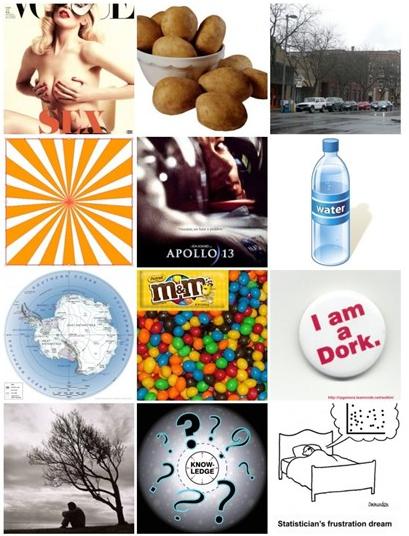
Darwin’s Valentine
Um…so yeah. I was bored. I don’t know why I never thought of this one earlier, but I think it’d be an awesome Valentine for any geek you know, haha.

The Rabbit Run
HOLY LORD!
So remember that blog a few days back when I was talking about Quake? Well, these guys apparently hold the record for finishing the whole game: 10 minutes and 58 seconds. It sounds pretty impressive, but wait until you see them play it. I have three words to describe them: Lords of Quake.
I have the utmost respect for these guys.
Oh, and by the way: this was done on Easy. The record on Nightmare (the hardest) difficulty? Just a minute slower.
This blog is absurd!
Hello people! So here’s a thing I wrote in response to an argument we were discussing in class about Nagel’s idea of absurdity, mainly because it’s a really interesting idea, and we had a really long discussion about it. Don’t read if you don’t want to, blah, blah, blahblahblahblahblah.
The issues regarding meaning and absurdity in our lives are two issues that have developed out of belief—specifically, beliefs regarding humans and their relationship to the rest of the world and universe. Humans naturally look for meaning in their lives and for their roles in the universe. An extreme conception of the meaning a human life can hold is demonstrated in the argument of a single person bringing an end to the world and all of humanity. However, this quest for meaning is a quest challenged most recently by existential philosophers seeking to demonstrate that meaning—at least meaning that can be understood by humans—does not exist. Thomas Nagel, in his work “The Absurd,” is one such philosopher, wishing to demonstrate that meaning—philosophical meaning, specifically—does not exist in a manner that can be understood by humans.
By first examining Nagel’s view of philosophical absurdity, a brief overview of a common conception of meaning, and then relating both of these viewpoints to the argument that meaning can be found in the life of a person who brings an end to humanity—henceforth called the Mad Scientist Argument—I will demonstrate that when Nagel’s definition of absurdity is applied to the argument, regardless of whether or not we accept that the Mad Scientist’s life impacts things, meaninglessness is eventually the conclusion reached.
In “The Absurd,” Nagel makes a distinction between two different types of absurdity. Peoples’ lives can become absurd temporarily due to their ambitions, circumstances, or relations. This, for Nagel, is what he considers to be ordinary, more situational absurdity—the “conspicuous discrepancies between…aspiration and reality” (Nagel, 718). He cites the example of a person giving a complex speech to support a motion that has already passed.
Philosophical absurdity, on the other hand, involves a more universal component—recognizing the collision or conflict between how seriously we take our lives and the possibility that everything we hold important (everything that we are serious about) is open to doubt (Nagel, 718). As humans, we are able to operate with these two viewpoints, since we are able to step back reflect on our lives and recognize the possibility that all things we take seriously are arbitrary, and yet we still do take things seriously. According to Nagel, this is what makes life absurd.
Nagel’s take on meaninglessness and absurdity contrasts with another, more popular viewpoint that presents meaningfulness as relative to the entire universe—similar to Nagel—but claiming that meaning can still be found in the form of impact. This idea is a type of meaningfulness-absurdity compatibilism—the idea that if a person were to affect things on a large enough scale, (i.e., something that is larger than themselves), their lives would be deemed meaningful and be free of absurdity, at least on the philosophical level. Nagel himself points to this type of example in “The Absurd.” “Those seeking to supply their lives with meaning,” he states “usually envision a role or function in something larger than themselves” (Nagel, 720). What I am calling the Mad Scientist Argument falls into this realm.
Suppose for the sake of argument that a Mad Scientist launches a rocket directly into the sun and, by doing so, causes the sun to explode. Due to this explosion, the planet and the entire human race is (forever) destroyed. The case made by those who pose similar scenarios to the Mad Scientist Argument is this: the Mad Scientist, by destroying the human race, has impacted the universe as a whole, since the universe is now forever going to be free of the influence of humans. Not only has the Mad Scientist changed the human race (by destroying it, of course), he has also eliminated one of the influences of the universe.
Such extreme individual cases, proponents of this viewpoint argue, are strong arguments for meaning and against absurdity. Despite the fact that the Mad Scientist is just one life, if it is in fact the case that his life gains meaning due to his destruction of the human race—since it is very difficult to claim that the person who destroyed the entire human race has a life devoid of meaning through its impact—then it is a case against complete absurdity.
The question that an example such as the Mad Scientist Argument poses is rather complex: does an individual bringing an end to the human race cause that individual’s life to have meaning? If this idea is explored further, we will see that it leads to an interesting conclusion and, ultimately, leads us back to a discussion of Nagel and his idea of absurdity.
Suppose we are to accept that the Mad Scientist’s life is given meaning when he destroys the human race by launching a rocket into the sun. If we accept this as the case, it follows that the next step would be to find out how the Mad Scientist was able to gain a meaningful life. To do so, we have to take a step back from the given scenario.
Yes, the Mad Scientist’s life was given its ultimate meaning when he destroyed the human race, but the question must be asked: would the Mad Scientist’s life still have gained meaning if the influences in his life had led him down another path? Perhaps his major professor at MIT dissuaded him from working for NASA, or his parents refused to support him during college and he had to drop out due to money issues. Suppose his great-grandparents had decided to remain in Europe instead of traveling to the United States, or suppose that he had had an older brother who persuaded him to go into business instead of science. Going even further back, suppose certain metal alloys had never been invented, making it impossible to even construct rockets capable of withstanding the heat needed to launch them into space, or suppose that certain political conflicts had delayed the advancement of science, causing rockets to not even be a feasible scientific effort during the lifetime of the Mad Scientist.
In other words, there are people in the Mad Scientist’s past who, in one way or another, directly or indirectly, influenced his ultimate position and made it possible for him to even be capable of launching a rocket into the sun and destroying the human race. Thus, if we deem the Mad Scientist’s life meaningful through the impact it had on the universe, we must deem every life that proceeded and affected him (all the lives that impacted him), causing him to be the person he was, meaningful as well. We cannot assign meaning to the Mad Scientist’s life without also assigning meaning to the lives of all that impacted him and shaped him into the rocket-launching Mad Scientist that decided to destroy the human race.
This argument demonstrates that once meaningfulness is assigned to the Mad Scientist, there is no non-arbitrary point at which we can cease assigning meaning to the lives of those who impacted him. However, this point is taken from a somewhat different angle when the Mad Scientist Argument is examined from Nagel’s viewpoint.
It is my opinion that, if this argument were to be analyzed by Nagel, it would still fail to be an adequate argument against absurdity. Following up on his acknowledgment that a common method of seeking meaning for one’s life is to view one’s role in something larger than one’s self (Nagel, 720), he points out an important condition: if we are to seek meaning in a larger enterprise, the meaning must still come back to something we are able to understand—lacking any understanding of the larger enterprise negates any possible meaning we may be able to derive from it. As he puts it, “its [the meaning’s] significance must come back to what we can understand, or it will not even appear to give us what we are seeking” (Nagel, 721).
If we are to accept that the Mad Scientist’s life has meaning, we also have to accept that this meaning arises from the circumstances that put him in the position to end the world. Therefore, according to the idea of meaningfulness, everything that influenced the scientist would have to be assigned meaning (as would everything that influenced them to put them in a place to influence the scientist, and so on).
This is the point to which Nagel would respond. In order to assign meaning to the Mad Scientist and to all who, in one way or another, impacted him, we would have to take these impacts and their ramifications seriously in order to understand them. However, since the impact from person to person—for each person leading up to those directly influencing the Mad Scientist—is so hard to find and so complicated (for example, how do whether or not the scientist’s first grade teacher’s choice of having the children focus more on art than math impacted the scientist in the end?), there is no way to understand it, and therefore, we really can’t derive any meaning from it.
One possible objection to this analysis involves the idea that Nagel’s definition of understanding does not have to be so stringent—that is, it is not necessary for us to completely understand every impact every person has on the Mad Scientist in order to gain a general understanding of the causal events (and their meanings) that led the Mad Scientist to the point where he destroyed the human race (thus giving his own life meaning). It is my opinion that Nagel would counter this argument by claiming that our seriousness in our attempts to discover the meanings in the Mad Scientist’s life and the lives of all who impacted him is in direct conflict with his idea that these things we take seriously are entirely arbitrary—in other words, the argument would still lead us to the conclusion of absurdity, regardless of whether or not we initially accepted that the Mad Scientist’s life had meaning.
What I’ve attempted to show in this essay is the fact that even with an example as extreme as the Mad Scientist argument, it can be demonstrated, using Nagel’s definition of philosophical absurdity, that we can still be led to the conclusion of absurdity. Even if we are to accept the idea that our lives have meaning, we are led, through our serious attempts to discover this meaning, to the conflict Nagel points out between the seriousness of our lives and the arbitrariness of the things we take seriously. This, to him, is absurdity.
Reference: Nagel, T. (1971, December). The absurd. The Journal of Philosophy, 716-727.
aaaaaaaAAAAAAAAAAAaaaaaaa!
THE best scene from It’s Always Sunny in Philadelphia.
The sun rises in the east, as the bun rises in the yeast
Haha, so…
You know you’re a geek when you can hold a two-hour long conversation with a person about the following (while making ramen and instant mashed potatoes):
– Pokemon (cards)
– Pokemon (Gameboy, all versions prior to Crystal)
– Doom
– Quake (and how hard the last few levels are to beat)
– lolcats
– 4chan
– Rickrolling
– Rickrolling 4chan
– lolcats Rickrolling 4chan
– Fallout 2
– Fallout 3
– Matricies
– Strategies for understanding the accents of all the foreign teachers in the math/stats departments
– Stupid math jokes
– Calculus
– Futurama
Yeah, this was Lanky and I. We need help.
Underwear Phobia (not really, but interesting titles are important)
So I found this article today…I liked it.
“Women who love fat men”
Soft and strong: Bigger men have their admirers.
It’s a common assumption that women like their men with chiseled cheekbones and a taut stomach. Studies of male physical attractiveness tend to support this idea, with research by University College London finding that women like their men muscular (we’re talking athletic, not Arnie) and with a narrow waist and wide shoulders.
Of course, there are always exceptions. David Beckham’s rippled torso might make most girls go weak at the knees but, for some, fleshy wobbles are a huge turn-on.
Take 29-year-old Heidi – her ideal man would weigh 158kg [that’s about 348 lbs.]. ‘Ideally, he would have some muscle and plenty of soft fat covering his body,’ she explains. ‘He’d have to have good facial features, particularly nice eyes and, to seal the deal, a wide bum and thick legs to carry him around.’
Heidi says it is the dichotomy of soft and strong she finds so titillating. ‘Fat men are big compared to me and yet there’s a vulnerability to them because they’re not falling in line with societal standards. I’m very turned on by the contrast in our bodies and find the “giving in to temptation” element – to food and sex – to be exciting. And I simply like the look of a fat, round, soft belly.’
Grace, 35, is a retired plus-size model and, like Heidi, she also admits to being a chubby chaser. ‘On a purely sexual level, I don’t find slender bodies very inviting. As a little girl I always found fat people attractive and always had a compulsion to want to hug them.’
Tough and cuddly
Dr Viren Swami, co-author of The Psychology of Physical Attraction, has researched admirers of fat people. ‘We know about men who like fat women but we haven’t done any research into women who like bigger men simply because they’re not as common – but we do know they are out there. The non-scientific research we have done found fat men are described as “bears” because they are both tough and cuddly.’
In other circles, namely online dating websites and in the fat acceptance movement, these men are also referred to as Big Handsome Men. But, according to Grace, there is a big difference between a fat man and a big, handsome one. ‘I’ve only ever dated big men who were happy with themselves but that’s getting harder to find nowadays. If I suspect a man has a “woe is me, I’m fat” attitude, I wouldn’t get involved. But if he considered himself a Big Handsome Man, then I would be interested. Nobody wants to date someone who hates their body.’
Heidi says her problem is getting men to take her seriously. ‘I’ve had to work pretty hard to get guys to ask me out. There’s no playing hard to get with many fat guys – they just don’t chase women the way athletic types are prone to.’
Both women have had to justify their taste in the opposite sex. ‘I often get asked the age-old “Don’t you worry about their health?” question,’ says Grace. ‘I tell them eating a healthy, balanced diet and being active should be to achieve health and not weight loss. I do not advocate a man being sedentary and eating junk food.’
Feeding a fetish
But, aside from simply enjoying the company of an upbeat, overweight, yet active, fruit-scoffing man, Dr Swami says it’s likely female fat admirers may have dominance issues.
‘In developed countries, fat is associated with laziness and bigger people are often denigrated in society. This makes these women the stronger, more accepted ones and challenges typical gender assumptions. When men date fat women, they are called “feeders” and get pleasure from feeding her and being dominant. This could also be the case here. Another explanation could be they have a fetish for fat flaps or “pannus”, which are hanging flaps of adipose tissue.’
Whatever the explanation, these women are at least challenging the idea that thin is the epitome of attraction (although most men admit a fleshy, imperfect handful is far sexier than a boney, veiny limb).
Dr Swami says we’re told women should be slim yet busty and that men should look like Brad Pitt. ‘In many cases, most people disagree about what is sexy and what isn’t. Lots of women fancy Brad but some don’t.’ It’s nice to know that while most of us fear the flab, there are some who embrace, hug and hold the bulge.
Just a good perspective on the whole thing. Not exactly my perspective, but close enough.

 Eigenblogger