TWSB: Math: Ur Doin It Wrong
So today’s topic immediately brought to mind this little joke, which I’m sure you’ve all seen if you’ve traversed the Tubes for more than ten minutes:
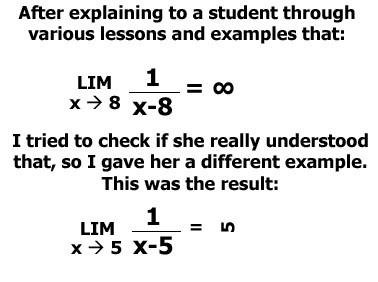
I know it’s not the same thing, but that’s what it reminded me of.
Anyway.
Today’s science blog has to do with the phenomenon called anomalous cancellation. Anomalous cancellations are arithmetic procedural errors with fractions that, despite being errors, will still result in a correct answer.
Examples from Wiki:
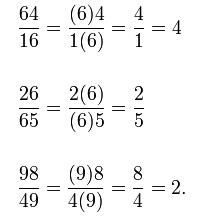
So it’s basically like looking at a problem and, as if you don’t know how to correctly solve it, trying to solve it intuitively based on the features of the numbers in the problem.
I might just be imagining it (because I’m me and I’m a spaz), but I feel like I come across this type of thing a lot. That is, I feel like I come across many situations in all my stats stuff where the correct answer can be achieved by seemingly “simple” methods that, in actuality, are incorrect method-wise but still lead to correct answers.
But again, I might be imagining it.
Anyway, I felt this an adequate topic for today’s blog, as I’m sure we’ve all come across problems like this but were not (at least, I was not) aware that such things had an actual name.
Numbers are crazy buggers, aren’t they?
Edit: Get your butts over to YouTube and listen to this awesome discussion of Leibniz’ Monadology. This pretty much made my week.
Edit 2: I don’t know why I didn’t just embed the freaking video in the first place. Claudia dumb!
In Honor of Newton’s Birthday*
Anybody who knows me at all knows that I get really, really obsessive about things. I kind of go off on these monomaniacal mental benders where whatever it is I’m obsessing over is doggedly demanding as much of my attention as it can get.
If you’ve perused the last month’s worth of posts here, you know that the current item of obsession is the calculus priority dispute. Obviously the Leibniz factor plays a big part as to why I’m so into this particular bit of mathematical history, but there’s another component that’s equally as fascinating to me.
The reason I went into psychology when I first started college was really because of my interest in intelligence. The various ways we measure intelligence interested me and I was curious as to whether there could be alternate scales produced that would better get at whatever latent factor(s) composed what we call intelligence.
Along those lines, the idea of “genius” has always been intriguing to me as well. I sit here and read about these ridiculously ingenious dudes and I cannot imagine what it would be like going through life with a mind of that caliber. What kind of unique thought processes must you have in order to theorize and describe universal gravitation? How must have Newton seen the world and interpreted even the most mundane of things? Did Leibniz go through life examining every facet of his experiences trying to see how to fit everything into his attempt to create an alphabet of human thought? What kind of mind does it take to go from “I feel that my mathematics knowledge is inadequate” *studystudystudy* “oh, here’s this new thing I came up with called ‘calculus’!”?
I’m such a pleb I can’t even fathom the depth of thought these guys (and other ridiculously intelligent people like them) possessed. It would be the coolest thing to be able to experience that level of understanding, even for like five minutes.
And then, of course, you have to wonder what that component (or components) is (are) that pushes someone from “normal intelligence” to this level of genius. And that brings up the question of whether we all possess that level of thought and the only thing separating “regular” people from the super geniuses is some other component of brain chemistry/personality/persistence/something else.
This is something I’m pretty much always thinking about; the whole calculus thing has just brought it back to the forefront of my mind.
Anyway.
Oh, and Merry Christmas, y’all!
*Newton was born before the English switched to the Gregorian calendar (they were using the Julian calender back when he was born); using the Gregorian puts his DoB on a different day.
Are you sick of all the calculus stuff yet?
Got my “Newton v. Leibniz” paper work-shopped today and my teacher said it sounded like something out of The New Yorker. So that was pretty cool.
I’ll post it here once I edit it a little more. There are still a few parts I’m not happy with.
ANYWAY.
If there’s anyone else out there who really digs the history of science/philosophy of science/science in general, they might want to check out the works of Carl Djerassi. Dr. Djerassi, an emeritus professor at Stanford, writes “science-in-fiction.” This, he says, is different than science fiction but also different than biography, as it illustrates scientific history via the human, personal sides of some of the most prominent scientists and scientific events that we’ve seen. In addition to fiction, he also writes poetry, memoir, and plays. I recommend “Calculus” because…well, obvious reasons.
Anyway, check out some of his work if this sounds interesting to you. I just spent like two hours reading his stuff and researching him. Very cool dude.
That’s all!
CONTROL YOURSELF, CLAUDIA
(warning: caps lock abuse ahead. Ready yourselves.)
I should have learned by now that rants about my passions do not a ten page essay make.
Hell, it’s not even a rant. It’s just a history.
But it’s the calculus controversy! HOW CAN I NOT BE EXCITED?!
Seriously, this stuff is fascinating. Even if I didn’t have a massive lady boner for Leibniz, I’d be just as engrossed in this.
Newton was 23 years old when he came up with his method of fluxions and fluents.
TWENTY THREE YEARS OLD.
Can you imagine that? God, when I was twenty three I was busy binge-drinking Red Bull and trying not to spontaneously combust over my pittance of a Master’s thesis (“durrrr, what’s an eigenvalue?”). This guy was INVENTING CALCULUS.
And Leibniz taught himself Latin and was proficient in it by the time he was twelve. TWELVE. I couldn’t even count to ten in another language when I was twelve! He published his first book on combinatorics when he was twenty, even before starting his studies in math.
Freaking salfjalsfhfhsfahghghghh.
I love this stuff, but reading about it also makes me feel like an IDIOT, because what the hell have I done with my life?
But that is immaterial.
And the actual battle over priority between these two guys? Oh my god.
For a dispute over something as magnificent as calculus between two of the greatest minds ever, there was sure a lot of hair-pulling (wig-pulling?) and name-calling going on.
And it TOTALLY wasn’t a fair fight, either! Both men were members of the Royal Society of London. At the nastiest point of their fighting, Newton had been appointed President. He used his power to get a “report” he’d written on his own published as if it were an effort of the entire Society. The report basically said that Leibniz did, in fact, “have prior knowledge” of Newton’s calculus when he started working on his own. It was enough evidence against Leibniz to put him in a bad light for the rest of his life. He had one person attend his funeral when he died in 1716. Yup, the guy who co-invented calculus, the guy who refined the binary system, the guy who anticipated the distinction between the conscious and unconscious long before anyone else, had one person attend his funeral.
I mean, seriously. Isn’t that just sad? Don’t you feel badly for him? He deserved better, man.
Bah.
I’m like beyond hyper excited right now for some reason. Gonna go write some more of this essay, then gonna go work on NaNoWriMo nonsense. Haha, I’ve been pretty quiet about it thus far (shocking!) but that’s because a) it’s not as good of a plot as my previous three were, even though it’s coming along quite smoothly and b) school and teaching have so absorbed my soul that I even keep forgetting to update my word count on the website.
Maybe I’ll put up an excerpt later this month.
HUTTAH!
November 14, 1716
The day the world lost its last universal genius*: Leibniz.
I know, I know. “Claudia loves Leibniz.” You all know this.
But why?
Actually, I don’t really know. I know it sounds crazy and weird, but I feel like I have some sort of innate, subconscious, time-transcending connection with the dude, you know? It’s like the stuff I read about him and his philosophy are things I already know on some level and can identify with in some strange manner.
I mean, am I nutso?** Does anyone else have someone (who lived long ago or is living now) with whom they feel like they have this weird connection, even though you’ve never personally met? Or am I just a creepy stalker born a couple centuries too late?
Anyway. Either way.
Today I shall MOURN because SOMEBODY NEEDS TO, DAMMIT!
This essay’s got me all fired up. I’mma go write some more.
TO THE BATMOBILE! UI LIBRARY COMPUTER LAB!
*Several sources peg him as such, it’s not just me being a fangirl
**Don’t answer that
Sweet Jesus, I love calculus
We talked about Leibniz in calculus today. My hands were shaking so badly I could barely write.
I am not ashamed.
Why are all the smart and sexy ones dead?
It’s The Most Wonderful Time of the Year!
Of course, I’m talking about Gottfried Leibniz’ birthday!

The world has been without your physical presence for too long, my friend. Reincarnate so that I can date you stalk you pet your wig admire your genius in a completely appropriate and non-creepy manner.
Was going to buy some Choco Leibniz today, but I forgot. Instead, I made this:
I was listening to my music in the car the other day and realized how well Bittersweet Symphony would go with something from Coldplay. So I gave it a shot.
Happy birthday, my main man. <3
Dear people who have found my blog by searching WordPress for “Leibniz porn”:
I don’t know who you are or where you come from, but I have a feeling we are kindred spirits.
Unless “Leibniz porn” is slang for something else entirely. In which case, someone please inform me of its meaning so as to allow me to avoid amy embarrassment if I were to go to any given public area and say, “gee, I could really go for some Leibniz porn.”
Which has been known to happen.
And on another Leibniz-related note, we are to read part of the Leibniz-Clarke correspondence for Philosophy of Physics this week. This correspondence consisted of a series of letters exchanged between our hero Gottfried and Samuel Clarke, an ardent supporter of Newton and basically a speaker on behalf of him. The two men’s correspondence began in 1715 and ended a year or so later with Leibniz’ death.
Anyway. The two talk mainly about the dispute between absolute vs. relational space (Newton’s/Clarke’s and Leibniz’ views, respectively) as well as things like whether our universe could have been created by god earlier or later than it was and whether or not space is mostly empty. It’s super interesting and fantastic if you get a good translation, ‘cause then you get the snarkiness that was exchanged along with the ideas. For example, at one point in Leibniz’ fourth letter to Clarke you get this little jab as the two debate the meaning of the word “sensorium’”: “The question is indeed about Newton’s sense for that word, not Goclenius’s, Clarke shouldn’t criticize me for quoting the Philosophical Dictionary, because the design of dictionaries is to show the use of words.” Clarke’s got a couple good ones in there, too.
Okay, that is all. I’m in Leibniz ecstasy land today. It’s a good, safe, happy place. Full of wigs.
LEIBNIZ DAY
It’s Leibniz Day, it’s Leibniz Day!
I suggest we all mass-email Google until they make a Google logo for display on Leibniz’ birthday (at least for every country except Canada). The guy did SO MUCH! He created the freaking binary system.
Seriously.
They could spell “Google” in binary!

Okay, it’s a little long, but they’re Google, they rule the world. They could maybe make the binary into little blocks.
Anyway.
Choco Leibniz and calculus for all! Find an ostentatious wig, put it on, and be awesome. Channel the amazingness that is Gottfried.
DO IT!
Leibniz is so underrated
DAMN STRAIGHT. This man needs more credit. I know, I know, I’ve said it before, but it’s true, dammit!
Also, is it sad that this made my day?

Accidental bimodal distributions FTW.
Today’s song: Starlight by Muse
Canada Day? More like LEIBNIZ DAY
GUESS WHOSE BIRTHDAY IT IS? (hint: it requires caps lock)
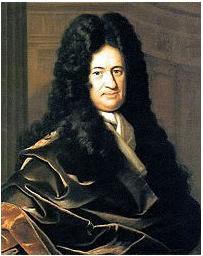
YAY!
Go buy yourselves some Choco Leibniz and do some calculus to celebrate.
Or put on an ostentatious wig, find some guy who looks like Isaac Newton, and have an epic battle in the street.
I’m going to sit here and think Leibniz thoughts for the rest of the afternoon, myself.
Today’s song: Yours to Keep by Teddybears (featuring Paola)
[insert shriek of happiness here]
HOLY CRAP look what I got!!!

I completely forgot I asked for this, so it was a very pleasant surprise upon opening the box. It also made for a very amusing few minutes during which I was screaming with glee and my mom had to explain to her freaked out boyfriend that this reaction was natural.
Yay.
Ha!
Leibniz’ crater on the moon is bigger than Newton’s.
This makes me happy.
Yes, I’m that obsessive, deal with it.
I should be stopped.
Oh-ho-ho, so every webcomic’s jumping on this apparent bandwagon, are they? Allow me to provide my OWN input!

GOD IS A MONAD
Alright bitches, today is Leibniz’ birthday, so you know what that means: 363 years ago today the coolest person in the universe was born. And as if you haven’t already heard enough about him from me, today I shall remind you all of a few of his contributions to the world:
- Monads. The ultimate fundamental elements of the universe that all act independently but yet appear to act cohesively.
- Optimisim. The best of all possible Leibniz contributions.
- Pre-Freudian psychology. Namely, the differentiation between the conscious and the unconscious.
- Library science. No joke.
- Choco Leibniz. Sure, they’d still be here, but they might have been called Choco Pascal or some such if Gottfried hadn’t been around.
- The freaking BINARY SYSTEM.
- That wig. Dear god, that wig.
- And let’s not forget calculus. Yeah, you hear that, Newton?! CALCULUS!
I adore you, Gottfried.
WHAT IS WRONG WITH ME
AAAAAAAAHHHHHH WHAT THE HELL?!?!?
WHY didn’t I go as Leibniz today? WHY?!
God, that would have been AMAZING! I would have worn the black feather boa on my head and pranced around drawing integrals all over stuff and mass-sacrificing Fig Newtons in a pit of flame!
CRAP!
Next year, I promise.
Claudia’s Top 5 Sexiest Men of the Enlightenment
Here are five instances where beauty and brains do occur simultaneously. Also, I adore the fashion of this era.
(2-years-later-retrospective-observation: HOLY CRAP, I posted this on Leibniz’ birthday!)
1. This man wears the best of all possible wigs, and he wears it well. Leibniz did everything—mathematics, linguistics, philosophy, logic, engineering, law, natural science—you name a topic, he probably dabbled in it. Polymathy is hot, and so are ostentatious wigs.
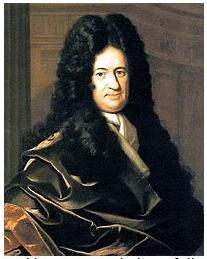
Eye candy AND brain candy.
2. Anyone who knows me knows that I think Voltaire is the sexiest man ever to live. I slobbered all over Candide when I first read it, and I see it as a proof of God that such wit could be combined with such good looks.

He can satire his way into my heart any day.
3. It feels fundamentally wrong to me to have Leibniz and Newton inhabiting the same list, but you have to admit—the guy looks badass. Setting aside the calculus issue, there are very few things Newton can’t take at least some credit for in the world of science. Plus, he shoved a darning needle behind his eye and moved it around to see if it distorted his vision. That’s dedication.

“I am the CALCULATOR…I will divide you by zero!”
4. Hume has a very confident look about him. And why shouldn’t he? After all, he did—single-handedly—take down the notions of induction and causation. And he did it while looking good. That jacket looks very sexy on him.

The missing shade of awesome.
5. I don’t know much about this attractive young man named d’Alembert, but he apparently studied vibrating strings, which sounds (no pun intended) really cool. He did argue, incorrectly, that the probability of a coin landing heads increased with each time it landed tails, but since that seems like common sense to most people, I can respect that.

“Mmm…strings.”
Yeah.
Continental Rationalists to Porn: The Joys of Wikipedia
Here is a new game I propose we start:
Wikipedia: Six Degrees of Separation
Rules:
1. Select a random topic (person, place, thing, whatever) and find its article on Wikipedia
2. Click on a link in the article that leads you to a different page
3. Repeat this process for each new page you are brought to
4. See if you can reach the “Pornography” page in less than or exactly six clicks
5. Write down your starting subject and steps and post them in your blogs
Here’s an example (or examples, I guess) to get you started. Here are my three starting points: Rene Descartes, Baruch Spinoza, and Gottfried Leibniz, the three Continental Rationalists, and the steps that got me from their articles to the pornography article.
Starting point: Rene Descartes
Click one: Amsterdam
Click two: Red-Light District
Click three: Pornography
(Haha, that was fast, eh? You’re a dirty boy, Rene.)
Starting point: Baruch Spinoza
Click one: Atheist
Click two: Moral Universalism
Click three: Sex
Click four: Sexual Intercourse
Click five: Sexual Arousal
Click six: Pornography
Starting point: Gottfried Leibniz
Click one: Ethics
Click two: List of Ethics Topics
Click three: Family Values
Click four: Pornography
Hahaha, this is awesome. Leibniz to porno in four easy steps! Life is complete.
It’s 4:45 AM…do you know where your daily blog is?
Right here!
So I’m done with all the actual tests for finals week, but I still have my written final for Modern Philosophy due tomorrow. Or today. Whatever the hell you qualify 5 in the morning as.
Yes, I stayed up this late (early) ‘cause I had basically NO TIME to write this final until about 4 this afternoon, and, me being me, I procrastinated until about 11. The essay on Hume I cranked out in like 15 minutes, but I’ve been slowly and painfully churning out this damn Berkeley essay for the past six hours.
But now I’m done! DONE WITH FINALS WEEK! So of course, since I did my Modern final tonight, I felt it necessary to list the philosophers we covered in order from my favorite to my least favorite. Hmm, what will my #1 be…?
1. Leibniz
I LOVE THIS MAN WITH ALL MY SOUL. I really, really like the way he works through the logic of his philosophy, even though his writing style basically looks down its nose at you, insulting you under its breath because it’s not totally obvious to you right away. But yeah, this guy has taken over my life.
2. Kant
Kant freaking rocks, and not just because his name can be used in a lot of stupid puns. I loved the way he demonstrated that math is not something of which we have a priori knowledge, and I just love the way he basically redefined how we should go about doing philosophy.
3. Hume
I like Hume, but I’m not a fan of the way he argued his way down to that there is no such thing as causality (cause and effect…if I hit the billiard ball with the stick, it will move forward), but because that’s the only way we can get around in the world, we can rely on it. But he does aggressively argue against something that we all take for granted to be true.
Take that, causality!
4. Berkeley
Berkeley interests me, and I don’t really know why. I think it’s because I totally disagree with his “to be is to be perceived” idea, and therefore I want to argue against it. So Berkeley would be in pretty good standing on this list, except for the fact that I had to write something like this at 4:30 in the morning because of him:
“The ‘common sense’ factor of Berkeley’s philosophy is explained as this: it is not simply the lack of direct perceptions of material substance that causes the belief that it doesn’t exist—it’s also the fact that there is no way to explain its existence. There is no reason for the material to exist if perceptions are sensory and can be linked to something that already has reason to exist, like the mind. Qualities do not need something on which they must be projected if they already exist in and out of the senses and are perceived that way. The absence of the material world preserves the parsimony Berkeley so strongly desires.”
5. Spinoza
AAAH SPINOZA! Despite the fact that I don’t know what to think of his philosophy (his logic works out so that his philosophy proves itself), he’s a cute, innocent looking little guy who was excommunicated ‘cause of what he believed. Poor little Spinoza. I sympathize for him.
6. Descartes
I love Descartes. Descartes is great. He’s the founder of modern philosophy, guys! But the reason he’s so far down on this list is because of his whole “evil deceiver” thing. Yes, the extreme doubt is good, but seriously, Rene…the evil deceiver? Ah, well. He had to get his ideas past the church somehow. Sneaky little guy.
7. Locke
Locke bothers me. I don’t really know why; I didn’t really pay that much attention those few days we were covering him. They were right before Spring Break. Haha.
So there you go.
Indiana Jones and the 25 Credits of Doom
I’m sorry, Rob. I don’t mean to be so freaked out, but I’m under so much freaking stress right now I’m about to die.
Honestly, this 25 credit thing was basically a breeze up until dead week started. Seriously. Now it’s hell on earth.
Will that stop me from attempting to do 28 credits in the fall?
Of course not. You know me.
OOH! OOH! But guess what I found!
RICE UNIVERSITY.
Behold! This is one of the professors there:
Mark A. Kulstad
Emphases: LEIBNIZ, History of Modern Philosophy, Epistemology.
This man, I want him. If I can’t stalk Leibniz, I’ll stalk the guy who studies him.
Oh, and the school also held the first annual NORTH AMERICAN LEIBNIZ CONFERENCE back in January.
Amazing.
HAHAHAHAHAHA
People, I just witnessed the best video on YouTube, and all I did was type “Leibniz” into the search bar.
In a sentence: high-schoolers + video camera + Newton-Leibniz controversy over calculus = AMAZING HILARITY. There’s even a Sparta reference!! And that feather boa (I think that’s what it is) is by no means an exaggeration of Leibniz’ wig.
You probably didn’t laugh nearly as hard as I did, but this is my blog, and thus I deem it appropriate for me to post things that cater to my specific humor. Such things as this.
Since my initial viewing of it, it has been watched 15 times and has been favorited. And posted on Facebook.
I should probably stop searching for Leibniz on the internet. Don’t get me wrong, I find some really funny stuff (for instance, last night I typed in “action Leibniz” in Google and found this, hence the MSN name change), but I probably annoy you all with my constant “Leibniz this” and “Leibniz that”…oh well.
Leibniz: a Short and Mildly Subjective Explanation of Why I Love the Man
So it’s now common knowledge that Leibniz was the coolest philosopher ever to me, right?
Good.
I figure now is a good a time as any to actually attempt to explain (briefly, cause I could go on for reams) why I like him so.
Frivolous reason first: have you seen that wig? Dear LORD, that’s amazing. Go to Wikipedia and check it out. It will change your life.
Now serious reasons.
Though Leibniz gets crap for his “best of all possible worlds, pre-established harmony” ideas, the way he justifies them makes perfect sense to me. Why is this? Well, it’s because, I realized a few days ago, that if you remove the God factor from Leibniz’ ideas, you essentially have what I’ve always thought of the universe.
Demonstration:
Leibniz says: we live in the best of all possible worlds because God, being omnipotent and in possession of moral and metaphysical perfection, could not possibly choose and create anything but the best. It is impossible for God to have chosen anything but what has been chosen, because that would imply he chose things that are less than the best. God can’t do that—he’s got moral and metaphysical perfection! Also, Leibniz explains the pre-established harmony in a way that basically states that God has “pre-aligned” all of the different substance’s actions so that they work in harmony together, making it seem like we interact with each other when we really don’t.
I say: we live in the best of all possible worlds because the mere existence of what is essentially nullifies and “cancels out” the existence of any other possible things. We live in the best world because it’s the only one we’ve got—the way things are are the way things are, and because they are, they cannot be anything else. Anything else that could be considered “better” simply cannot exist, because that would mean that it would take up the same space as what already exists, and that’s not really possible. As for the pre-established harmony thing, the fact that things exist and the fact that things will play out in exactly the way they’re going to play out (I know that’s vague and confusing, I’ll clear it up in a later blog) eliminates the possibility of all other occurrences. If we were to have a priori knowledge of all the courses of action every single atom in the universe were to take, we would essentially have knowledge of pre-established harmony. It’s pre-established in the sense that what is going to happen is going to be the thing that happens. If we have two choices, A and B, and we choose A, then we essentially eliminate the possibility of B ever occurring, and thus eliminate all branching off probabilities from that one probability.
Yeah.
Like I said, I’ll clear this up later.
I just wanted to give you the main reason why Leibniz is so appealing to me. So there you go!
If you don’t understand the material conditional, then the humor of this sentence is lost
Ugh. I’m conflicted. Well, that’s nothing new—what’s different this time is the fact that I’m conflicted about my career choice. Shocking, I know!
I’m really, really, really into philosophy right now, and I’m really, really, really stressing out about the statistics part of my Psychometrician plan (which is essentially the entirety of the plan). Why are these two things occurring simultaneously? Two reasons:
1. Leibniz
2. Teetering on the border between an A and a B in Sample Survey Methods
So I’m basically chalking this confliction up to the fact that I’m really enthused about a specific philosopher we’re studying while being way too stressed out over one of my stats classes. I’m not going to give in to this confliction. I don’t think I could build a philosophy teaching career around a single man I’m obsessed with (though if a university would let me teach a class solely on Leibniz, that would be AMAZING), and I don’t think a single stats class should intimidate me to the point where I’m willing to give up the career that sounds like it was made for me.
So yeah. Just thought I needed to talk (or write) that out so I could put it in stone.
As much as Leibniz rocks my socks, I love psychometrics. It’s what I was born to do.
But if I could do both at some point in my life, that would be freaking awesome.

 Eigenblogger