A Slight Deviation from my “200 Books” List
I finished reading this today:
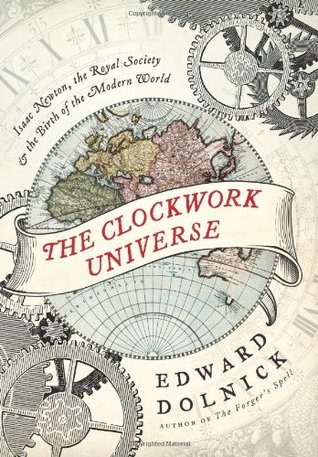
(Beautiful cover or beautiful cover?)
I’ve pretty much decided that my favorite time period/place has to be mid 16th- to mid 17th-century Europe. The intelligence that poured out of that region of the world during that time is downright ridiculous, not to mention the interactions of all the main intellectual players of the period: Newton, Leibniz, Kepler, Hooke, Pascal, Halley, Pepys, and Descartes, to name a few.
Edward Dolnick’s The Clockwork Universe is a pretty great discussion of how all these dudes—Newton, mainly—helped in the formation of the new methods of thought that developed during this time. There’s talk about the bubonic plague, there’s talk about Galileo, there’s talk about the various attempts to explain why the planets orbited the sun in ellipses rather than circles…and, of course, there’s talk about the Royal Society and how it got its start. The calculus debate’s in there, too, ’cause how could it not be?
The book ends with a rather beautiful little compendium of both facts and anecdotes about how the Principia truly impacted the scientific world, which I think was actually my favorite part of the book (apart from the little author’s note in the end where Dolnick proclaims proudly that he’s a Leibniz fan. Rock on!).
I recommend it if you’re at all interested in that fascinating period of time.
ALRIGHTY
Let’s put my 10,000 Days goal into some perspective: I am approximately 25.5 years old. Do you know how many days I’ve been alive?
9,340, counting today.
Nine thousand, three hundred and forty days.
So if I had been blogging from the day I was born, I still wouldn’t have reached my goal yet.
That is like eight levels of psycho.
As it stands, I’ve got about 20 years of blogging to go before I hit 10,000 posts. That is a long, long time, my friends. Think it’ll happen? I hope so!
(Haha, sorry, I don’t have anything exciting to talk about today.)
In This Blog: Wikipedia Gets Sassy about the Kilogram
I’ve talked about the kilogram quite a bit on here, but I want to revisit it a bit. Mainly because of Wikipedia’s sassy little remark about the International Prototype Kilogram (IPK).
The other six base SI units (second, meter, ampere, Kelvin, mole, and candela), which used to be based on physical artifacts, are now defined in terms of physical constants for precision’s sake. For example, the meter was originally defined as 1/10,000,000 of the meridian through Paris between the North Pole and the Equator. It is currently defined as the distance travelled by light in a vacuum in 1/299,792,458 of a second.
Only the kilogram remains to be redefined in this new, more precise way.
The IPK itself is a small little cylinder of platinum/iridium and is stored in Sèvres, France. It is the internationally recognized artifact that is defined as having a mass of exactly one kilogram. So it is, in essence, the kilogram.

But of course, there are copies of it. Sèvres holds three; other nations have national prototypes. And that’s where things get interesting.
Wiki: “By definition, the error in the measured value of the IPK’s mass is exactly zero; the IPK is the kilogram. However, any changes in the IPK’s mass over time can be deduced by comparing its mass to that of its official copies stored throughout the world, a process called ‘periodic verification.'”
“Beyond the simple wear that check standards can experience, the mass of even the carefully stored national prototypes can drift relative to the IPK for a variety of reasons, some known and some unknown.”
And what does this drift look like? the IPK itself is the line at zero denoted with the K. The other lines represent the mass changes in various national prototype kilograms.

Well, hell. And the IPK itself, Wiki notes, may be changing as well (and likely is), though it is still the “base” against which every other national prototype is compared.
Yup, humans have been to the moon but can’t figure out how to keep the kilogram constant. I find that hilarious.
But here’s where I lost it when reading this article:
“The magnitude of many of the units comprising the SI system of measurement, including most of those used in the measurement of electricity and light, are highly dependent upon the stability of a 134-year-old, golf ball-size cylinder of metal stored in a vault in France.”
Ooooh, Wiki…a bit of attitude, eh?
My mom can attest to the fact that I laughed about this for like 10 minutes straight.
(all pics from Wiki’s Kilogram page)
CLASSES!
Classesclassesclassesclassesclassesclassesclassesclassesclassesclassesclassesclasses
classesclassesclassesclassesclassesclassesclassesclassesclassesclassesclassesclasses
classesclassesclassesclassesclassesclassesclassesclassesclassesclassesclassesclasses!!
*Deep breath*
I’m back, bitches! Here’s the rundown:
Probability (STAT 451): This is the class I’ve been waiting for. I think this will be the one where calculus and stats will finally mate in a glorious orgy of bell curves and integrals.
Linear Algebra (MATH 330): I really think I’ll get more out of it this time, especially since Dr. Abo is awesome and I like the way he teaches. Plus there were three of us who got there early and we kind of bonded into a “let’s study together” group, so that’s cool.
Advanced Fiction (ENGL 492): After writing non-fic almost exclusively for quite some time now, it’s going to be interesting to switch back. But I’m excited! I love writing and I love reading others’ stories.
Numerical Linear Algebra (MATH 432): Hmm…not sure about this one. Today we just talked about some of the problems we were going to solve, including ones involving least squares methods and singular value decomposition. I’ve used both of those things in the context of multivariate stats, but never in depth. Though our professor did ask us what were some characteristics of a non-singular matrix and we all kind of hesitated before answering, so hopefully that means that we’re all at least on the same page as far as our familiarity with (or memory of) linear algebra goes.
Intro to Higher Math (MATH 215): Why are 200-level classes the most difficult ones? I’ve never understood that. Anyway, I foresee this being similar to Symbolic Logic (that’s code for insane amounts of work). I’m excited, though. And if I can make it through, I can take advanced calculus (Math…471? I think?) next spring! *flailing*
END!
An Ode to a (Semi-)Productive Summer
The academic summer is officially over in an hour! Let’s review the goals I specified in May (or June or whenever):
- Actually study for the GRE/GRE math subject test. FAIL. Loser.
- Rock calculus. DONE!
- Rock summer teaching. DONE!
- Go back up to Vancouver and walk the hell out of that city. FAIL. We were going to go up there, but plans fell through.
- Figure out what’s going down next fall as far as teaching goes. DONE!
- Figure out what’s going down for the rest of my life as far as everything goes. Uh…working on it?
- Hit at least 1000 walking miles. DONE!
- Thoroughly delve into Antognazza’s Leibniz: An Intellectual Biography. DONE! <3
- Reacquaint myself with my old linear algebra notes. I looked over them a few times and decided to take linear algebra again, so DONE sort of?
- Possibly visit Sean? FAIL. Too expensive. I’m sad.
- Spend a weekend doing absolutely nothing but Minecraft/drawing/sitting in my basement away from everyone. I don’t think I actually spent a whole weekend in the house. GOTTA WALK! So…FAIL?
- Research possible graduate schools (AGAIN, UGH). DONE! Canada’s on my radar again.
- A few other things that are private. ALL OF THESE WERE FAIL
Maybe it wasn’t as productive as I thought. But I did get Phase I of a big project done (which is something I’ve wanted to do for a long time) and am currently on Phase II, so that’s kind of good.
Haha, thanks, Google.

Yes. Yes I have.
No shame.
Anyway, completely changing topics…
I mention Achievement Hunter quite a bit on here. There are a few reasons for this.
- Listening to them game is like living in the house with the guys again. It’s hilarious.
- This sounds super dorky, but they kept me company over the summer. I didn’t have any friends around and they put out YouTube videos at least 5 times a week, so…that was that.
- They’re one of the funniest YouTube channels out there, in my opinion. Grown men cussing each other out playing video games is fantastic.
Since starting doing Let’s Plays of Minecraft back in 2012, they’ve done 65 half-hour (or longer) episodes, many featuring the Tower of Pimps.
Well check out the latest Minecraft update:
Pretty cool! Congrats, guys. And seriously, check them out (if excessive cursing doesn’t bother you, haha).
Book Review: Around the World in Eighty Days (Verne)
Have I read this before: Indeed! In high school, I think? I can’t remember exactly.
Review: Good lord, I love this book. Jules Verne’s characters are always awesome, but not a single one of them is more awesome than Phileas Fogg. I think he is my favorite literary character (with the possible exception of Captain Queeg).
“He was so exact that he was never in a hurry, was always ready, and was economical alike of his steps and his motions. he never took one step too many, and always went to his destination by the shortest cut.; he made no superfluous gestures, and was never seen to be moved or agitated. He was the most deliberate person in the world, yet always reached his destination at the exact moment.”
“…Mr. Fogg stopped him, and, turning to Sir Francis Cromarty, said, ‘Suppose we save this woman.’
‘Save the woman, Mr. Fogg!’
‘I have yet twelve hours to spare, I can devote them to that.’
‘Why, you are a man of heart!’
‘Sometimes,’ replied Phileas Fogg, quietly; ‘when I have the time.'”
How can you not love a character like that, seriously?
As for the plot itself, it’s pretty much classic Verne. I love how he’s always throwing his characters into seemingly impossible-to-remedy situations and then he’s like “AND SUDDENLY AN ELEPHANT” or something else and it saves the day. I reiterate from past blogs: Verne is awesome. And this is my favorite of his books (though re-reading 20,000 Leagues made me realize just how badass that one was, too).
Favorite part: “Stop the train, we need to have an emergency duel!” Nothing says “defending your honor” like wanting to use a brief stop at a train station to duel to the death. And, failing at that, nothing says “no seriously, I gotta defend my honor!” like ushering passengers out of a train car so that you can utilize said car for a duel to the death. Oh, Jules.
Rating: 9.5/10
Oooh
So here are pictures of shirts that I want need.
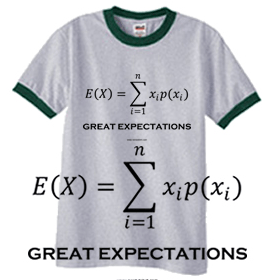


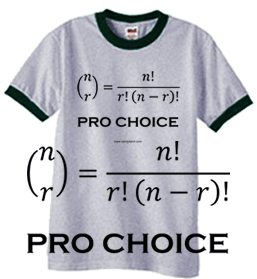
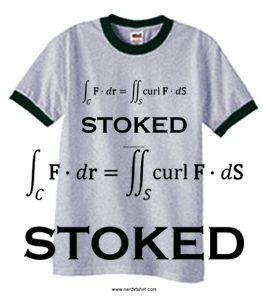
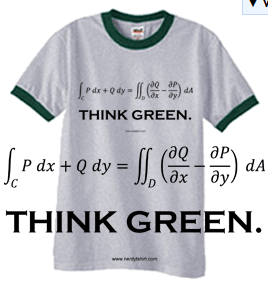
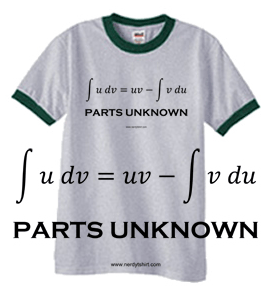
That “Stoked” one? Oh my god I want it. They have women’s shirts, too, so it might have to happen. The “Extended Hospitalization” one is pretty fantastic, too.
All from here.
Element 2
Well what the hell.
Thanks to a discussion I had with my mom yesterday concerning blue moons, I of course had the moon as the main star of my dream last night.
In the dream, it was the point in the future where our helium reserves had run out (real thing that’s happening, by the way). The top scientists had determined that mining the moon for helium was our most feasible option for replenishing the element, so we’d sent up a bunch of scientists/miners to do so. We’d set up these huge plots on the moon in which we mined the helium.
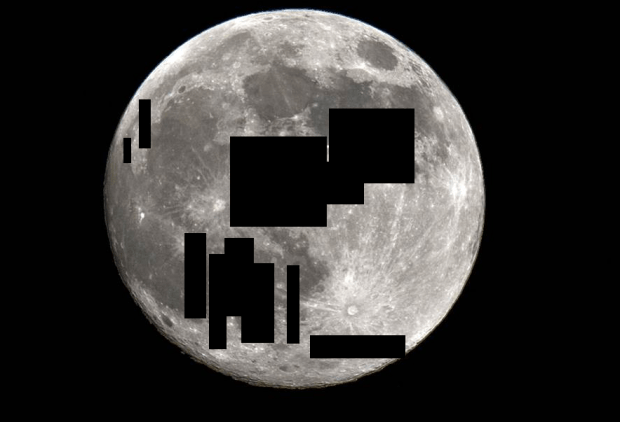
All was well and good, but as we started carting the helium back to earth, we realized that taking the element from the moon’s surface was actually eliminating the moon’s ability to reflect the sun. It had gotten to the point where the mining plots were resulting in huge black non-reflecting squares on the moon’s surface that could be seen from earth.
Representative pic (made with MS Paint so it’s crappy, but this is really what it looked like in the dream. Original from here):
I actually think the dream itself lasted like 2 minutes, but I remember feeling like we’d been waiting for days for the news to report whether the reflective nature of the moon would ever return in full or if we’d have to live with a patchy satellite.
Weeeeeeeeeeeeeeeeeird.
Book Review: The Count of Monte Cristo (Dumas)
Have I read this before: Yes. Long, long ago in a galaxy far, far away (junior high).
Review: Actually, I don’t know where I was when I read this, ‘cause I swear I only remember the “breaking out of prison” part. From this whole magnificent book, that’s the only part I remembered. That happened like in the first 100 pages! What the hell, younger me.
Anyway.
Look at this chart of the character relationships in this book and tell me this isn’t a soap opera in novel form.
A LOT happens in this book, but it’s really hard to summarize without giving it all away. For some reason it strikes me as almost a little bit Princess Bride-ish in parts, but maybe that’s ‘cause Dantes is really good at keeping his cool (most of the time).
Favorite part: Hmm…probably the whole “why is everybody getting poisoned? Who is poisoning everybody?! ENOUGH WITH THE POISONING JEEZ!” part. You know what I’m talking about if you’ve read it.
Rating: 7.5/10
This One is Tumblr’s Fault, I Swear
Someone I follow posted this awesome link to Newton’s notebooks stored in the Cambridge Digital Library (link link link!).
Now that I’ve got access to both Newton’s notes and Leibniz’ notes (thanks to checking out Dr. Wolfram’s awesome post on Leibniz’ archives), you can probably guess how freaking excited I am.
So. Graphology in itself is pretty much pseudoscience, but it’s still interesting to compare the writing styles of these two geniuses, just to see if any similarities/differences stand out. That’s allowed, right? (Screw it, I’m doing it anyway.)
A lot of Newton’s notes were written in English ‘cause…duh…he was an Englishman. From what I’ve read about Leibniz, I think he could read and write in English but not nearly as fluently as in several other languages; most of his work was in Latin, the rest in French and German. So I couldn’t find a good English excerpt from both. So let’s do Latin, just for the sake of keeping the language consistent.
Here’s a Newton page:

Look at his writing, it’s so neat! I’m no handwriting analyst or anything like that, but it looks like this section of Newton’s notes was written slowly and deliberately as if he’s just sitting there going, “yeah, I got this.” There are a few things crossed out, of course, but it looks like he took the time to carefully scratch them out and then just kept going. Slow but steady. And his numbers are so clear, too, holy crap.
The above is just a screenshot of a semi-magnified page; on the actual Cambridge site you can zoom in further and make out the English notes he made in the margin. If you look at a lot of other pages in this section of notes, Newton really seems to keep things very organized, even if it looks like he’s making scratch calculations in some parts.
And then there’s Leibniz:
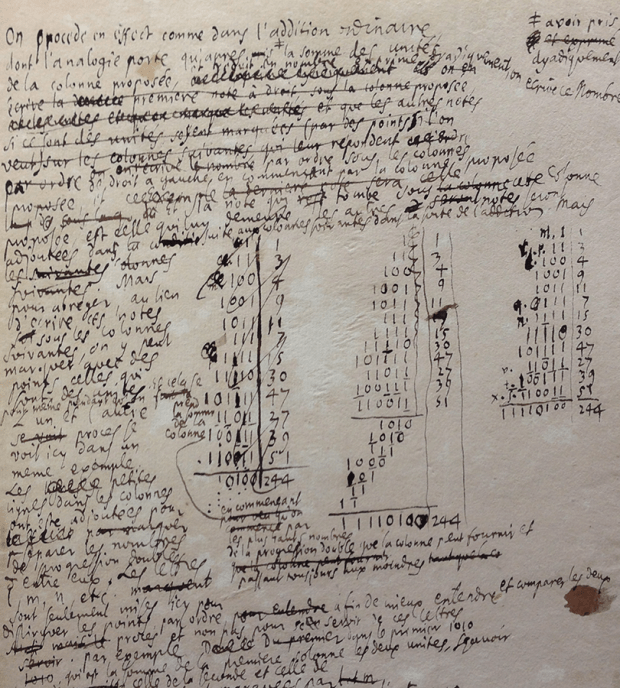
I was planning to do both samples in Latin like I just said above, but I’m snatching pictures of Leibniz’ notes from Dr. Wolfram’s post on him so there aren’t nearly as many choices as with Newton. So I figured a more appropriate comparison would be pages written by both men that contained both words and numbers. I believe Leibniz’ page is written in French, but I seriously can only make out like three words here.
I’m not sure if it’s just because of different writing tools or different ink/paper, but Leibniz looks like he pressed fairly hard (or at least as hard as you could with a quill). Also, in contrast to Newton, it looks to me like Leibniz wrote pretty rapidly. Newton’s corrections were either neat single cross-outs or carefully scribbled out so the mistake couldn’t be read. All of Leibniz’ corrections look like, “no time for error must keep writing!” *scratchscratchscratch* “ONWARD!” Even his numbers look rushed (look, it’s binary!). It almost looks like he used this page for just those calculations but then wrote around them, continuing from a previous page.
On some of the other pages Leibniz really manages to get a lot on a single page. We’re talking ITTY BITTY scrawl, a consequence of his becoming very near-sided in his 20s and it only getting worse as he got older. I’m actually not sure how good (or bad) Newton’s vision was. Of course he did stick a darning needle back behind his eye and wiggled it around (optics experiment), so…
Anyway. Just an interesting thing to see the differences/similarities in their styles.
Alrighty!
Alright y’all, my “for fun” class has been decided!
Ready?
*drumroll*
It’s LINEAR ALGEBRA!
But Claudia, you say, you already have taken Linear Algebra!
Indeed! But here are some reasons why I want to take it again:
1. It’s IMPORTANT. And I’m about 99% sure I could get a lot more out of it now than when I took it back in 2009. Now that I know I want to go study multivariate statistics—probably SEM specifically—I need to know my linear algebra. I need to know it very well. I knew it decently when I took multivariate stats and SEM, but now that I know how it’s used in those types of analyses, if I go back and take Linear again, I think I’ll be able to better pick out the really important stuff. At least to a greater degree than I did before.
2. I’m also taking Numerical Linear Algebra this semester as well, which (surprise, surprise) has Linear Algebra as a prereq. Since it’s been so long since I’ve had the prereq, I figured a little in-semester refresher could only be a good thing.
3. Calculus, trigonometry, and geometry are my friends. Algebra and I still spread dirty rumors about one another and glare hatefully at each other whenever we pass. This needs to change.
4. It’s being taught by Dr. Abo, the professor I had for Discrete Math last semester. Dr. Abo is very intelligent, very awesome, and very good at teaching. He’s also hilarious at times.
Yeah so anyway.
TWSB: It’s That SI Unit That Won’t Conform Again
Thisiscoolthisiscoolthisiscool.
I keep coming back to the kilogram in these science blogs. One day I think I’ll do like a (somewhat) comprehensive history of the SI units, ’cause I find them fascinating.
(I also really like the word kilogram.)
2/3 of the way there!
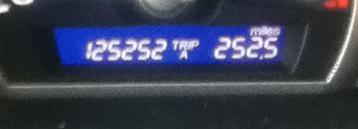
I hit 1,000 walking miles (1,609.34 km) for the year today.
For comparison:
There are approximately 1,000 miles between Portland, OR and San Diego, CA.

There are approximately 1,609 km between Paris, France and Naples, Italy.

Which is all cool, except all that was done within the city limits of Moscow (except for one walk to Pullman). I have to get to a bigger city, man.
OH YEAH, and this happened yesterday on my mom’s car:
Facebook Stalking for DATA!
Here’s more “Claudia is bored” random thingies.
I have 111 friends on Facebook. I wanted to see the distribution of birthdays across the months (and the zodiac signs, because why not?). So I Facebook stalked everyone and found that 97 of my 111 friends had their birthdays listed (at least month and day). Here’s the distribution by month:

I knew I had a lot of February, May, and November, but I didn’t know I had so many April and July. Haha, look at August and September. Very interesting, especially in comparison to this.
And here’s some zodiac just ‘cause:

I have a sucktastic headache tonight, so don’t take any of this seriously.
I’ve been employed as a stats lecturer for a year today!
AND SPEAKING OF SCHOOL:

I respectfully disagree with this to a certain extent.
[Realizes she is positioning herself in front of the verbal firing squad by disagreeing with Neil deGrasse Tyson]
Students want good (or at least passing) grades because they want the class to “count” as being mastered. They want the class to count because it’s one step closer to a degree. Why do most students want a degree? To get a good, well-paying job.
In my (probably stupid) opinion, I don’t think the blame for cheating can rest solely on the school system. It rests, rather on the fact that we value the eventual end product—tolerable job + money—over the actual learning itself.
Of course, I’m likely being idealistic if I say, “we should value learning for learning’s sake LOLZ,” but I think we’ve passed the point where that’s even in the back of our minds. “Gotta pass calc II to get into CS 352 to graduate! Who cares about the harmonic series?”
(You should care, dammit, it’s cool.)
I’d like to actually try to better defend my position on this, but I have a super bad headache tonight and I probably just typed a bunch of gibberish up there. If I remember later, I’ll add more to this.
Necessary side rant: why in the name of Captain Buttswag am I still working on this story? The chapter names are hilarious because a few of the chapters are solely about specific numbers. So I’ve got stand-in names like: “Chapter 5: 5” and “Chapter 7: 2.” UGH.
Stats Oddity
Holycrapholycrapholycrapholycrap this is cool!
Alright. This blog is about odds ratios, when they’re useful, and when they’re not.
Part I: WTF is an odds ratio?
So I feel really dumb because I’ve been dealing with odds ratios all summer for my other job and I just realized that I actually freaking teach odds ratios in class.
Durh.
An odds ratio is exactly what it sounds like: a ratio of odds (HOLY CRAP NO WAY!). So to better understand it, let’s look at what odds are. Odds are basically ratios of probabilities—specifically, the ratio of the probability of some even happening to the probability of it not happening.
Example: suppose you had 9 M&Ms in a bag (for some strange reason), three of which were red, five of which were green, and one of which is brown. To calculate your odds of pulling a red M&M, take the number of red M&Ms (3) over the number of non-red M&Ms (6). So the odds of pulling a red M&M are 3:6, or 1:2.
So what’s an odds ratio? It’s taking two of these odds and comparing them in ratio form (so it’s like a ratio of ratios). Wiki says it nicely: The odds ratio is the ratio of the odds of an event occurring in one group to the odds of it occurring in another group. If you’ve got the odds for Condition 1 as the numerator and the odds for Condition 2 as the denominator of your odds ratio, interpretation is as follows:
- Odds ratio = 1 means that the event is equally likely to occur in both Condition 1 and Condition 2.
- Odds ratio > 1 means that the event is more likely to occur in Condition 1
- Odds ratio < 1 means that the event is more likely to occur in Condition 2
Got it?
Good.
Part II: Where would you see an odds ratio?
RIGHT HERE!
My dad is involved in writing and distributing a water quality/water attitudes survey. Over the years such surveys have been distributed to 30-some-odd states and tons of data have been collected. A big part of my job this summer was to go through data from 2008, 2010, and 2012 for the four Pacific Northwest states, AK, ID, OR, and WA.
We looked specifically at a couple questions with binary answers. So let’s take this question as an example.
“Have you received water quality information from environmental agencies?” People could answer “yes” or “no.” So what we were interested in was the proportion of people who answered “yes” for several different demographics. For this example, let’s just use age. We could express this info in two different ways. The raw proportions (proportion saying “yes”) for each age range we defined:

And then the odds ratios:

Why is the >70 group missing on this plot? Because we’re using its odds as the denominator for each of the odds ratio calculations involving the other five age categories. To calculate the odds for the >70 group, we take the proportion of “yes” over the proportion of “no.” Let’s call that odds value D. Now let’s say we want the odds ratio for the < 30 group to the >70 group (the red bar in the second graph up there). We calculate its odds the same way we did for the >70 group. Let’s call that odds value N. Then to get that odds ratio value, we take N/D. Simple as that!
But what’s it telling us? If we look at that red bar in the second graph, it’s an odds ratio of about .8. Since .8 is less than 1, we can say that people who are in the >70 group are more likely to say “yes, I’ve gotten water quality info from environmental agencies” than are people in the <30 group. And we can actually see that difference reflected in the proportions graph: the >70 group’s proportion for “yes” is higher than the <30 group’s. In fact, look at the similar shapes of the two graphs overall.
Part III: Here’s where things get interesting.
So pretty cool so far, right? When you read papers that involve a lot of proportions for binary data like this, the researchers really like to give you odds ratios, sometimes in plots like this. And sometimes it works out where that’s okay, ‘cause the odds ratios reflect what’s actually going on with the raw proportions.
But as is often the case with real data, things aren’t always nice and pretty like that.
Let’s look at another question from the surveys: “How important is clean drinking water?” This was actually originally a Likert scale question (5 different importance values were possible) but we combined ratings to make it binary in the end: “Not Important” vs. “Important.” And again, we wanted to compare answers for several different demographics. Let’s just look at age again. Here’s the odds ratio plot, again using the odds for the >70 group as our denominator for the odds ratio calculations:
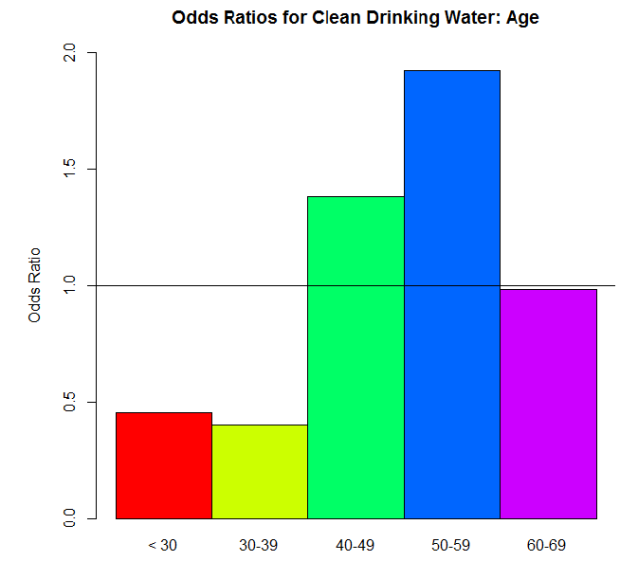
Woah! Big differences, huh? I bet the proportions differ dramatically between the age groups too—
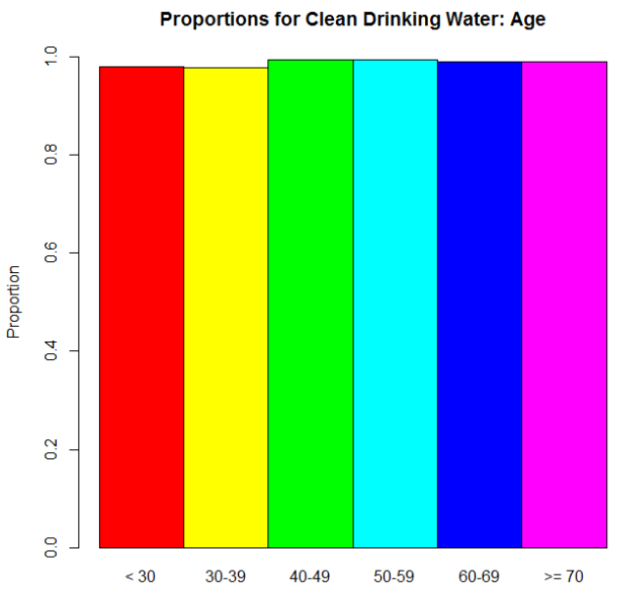
Oh.
Wait, then what the hell is going on with those odds ratios?
Here, dear reader, is where we see an instance of “stuff that works well under normal circumstances goes batshit crazy when we reach extremes.” Take another look at those proportions. No one’s going to say that clean drinking water isn’t important, right? Those are definitely high proportions. Extremely high, one might say. So when we take an odds—the ratio of the proportion for “Very Important” to the proportion for “Not Important.”–we’re seeing relatively big proportions being divided by relatively small proportions. The result? Big numbers (example: .97/.03 = 32.33, compared to a modest .56/.44 = 1.27…, for example). But the most important thing is that when you’re dealing with those extreme proportions, small differences are very much exaggerated in the odds ratios.
Suppose the proportion for the >70 group is .97. So its odds would be .97/.03 = 32.33. That 32.33 is our D again. And let’s say that the proportion for the 40 – 49 group is .98 (which I think it was, actually). Its odds would be .98/.01 = 98. The odds ratio: 98/32.33 = 3.03. A huge odds ratio! That on its own would suggest quite a big difference in proportions for these two groups…when in fact, they only differ by .01.
Part IV: So what?
This whole rambling thing has a point, I promise. As I mentioned, when you see data like this in studies and papers and stuff, you’ll often see odds ratios reported. You won’t see the actual raw proportions nearly as often. In the examples I used here, the “environmental agencies” question was an example where the differences in the odds ratios are actually meaningful, since they reflect the actual trend in the proportions. The “drinking water” question, on the other hand, was an example where the odds ratios on their own are practically meaningless. They’re dramatic, but they over-dramatize very small differences in the actual proportions. You can’t trust them on their own. If they are provided, look at the raw proportions. If not, ask yourself if dramatic odds ratios make sense. Would you expect big differences in proportions across groups, or no? Is there something else going on instead?
So the moral of the story is this: be wary as you traverse the vast universe of academic papers! Odds ratios in the mirror may be less impressive than they appear.
DONE!
(Edit: good lord, this is long. I envisioned it as like three paragraphs. Sorry.)
Ah, why not?
How do you ease anxiety?
Ha. Though that said “how do you EAT anxiety?” WITH A SPORK!
Do you know anyone who enjoys getting mosquito bites?
Premiering this week on TLC: XTREME FETISHES! Episode 1: Malaria Hysteria!
Do you think TLC has too many shows about big families and midgets?
HAHAHA I totally responded to the previous question before looking at this one.
Do you ever hang out with other people outside of your group of friends?
I don’t have a group of friends.
When was the last time you had a Jolly Rancher?
Last night!
Do you know anyone whose birthday is in August?
Like four people.
Do you have a headache right now?
Yeah, actually. Anticipation stress blows.
Do you pretend to be scared of thunderstorms to get attention?
I run around naked in thunderstorms to get attention.
Does the sound of crunchy [food] bother you?
Nope.
How often do you get heartburn?
THE ATRIA…THEY BUUUUUUUUURN! (not often)
Have you ever experienced contagious yawning?
Who hasn’t?
Have you ever rode in a topless car?
No. I don’t think so, at least.
What caused you to be angry last?
A discourteous “neighbor.”
Would you marry someone if they were unable to have sex?
Yup.
Don’t you hate it when a survey repeats a question?
Yup. (Don’t you hate it when a survey taker repeats an answer?)
Where’s your favorite coffee shop?
Coffee isn’t my cup of tea. HO HO I’M FUNNY TONIGHT.
What’s your opinion on cinnamon rolls?
I cannot think of them without thinking of Metalocalypse. That damn show has ruined my life.
Do you enjoy baking, or even cooking in general?
I do indeed. I’m bad at it, but I do it anyway!
Have you ever taken a bath with someone?
As a little kid, yeah.
What’s your grandma’s name?
Mom’s side: Joyce (but she’s dead to me, so who cares)
Dad’s side: Emily (she’s awesome)
When was the last time you had ice cream?
A very long time ago.
Think of the last person who said I love you, do you think they meant it?
Hopefully!
Where is your biological father right now?
Sleeping.
Do you have any freckles?
I do now that I’ve been out walking during daylight.
Do you like orange juice?
GOD NO. Arrogant pulpy nastiness.
Who did you last eat at a sit-down restaurant with?
Uh…good question.
How many bedrooms are there in your house?
Four?
Have you ever tried to find friends from elementary school online?
That’s called Facebook.
What kind of home do you hope to have when you’re older?
Is it mine? Am I living alone? Then I’m good to go.
Do you call it a buggy or a cart?
Cart.
Did you watch the Cosby Show when you were younger?
Nope.
How often do you check your e-mail?
Probably not as often as I should.
What color do you think best describes your personality?
Think of the gaudiest color you can. That’s me.
Have you ever built a sandcastle?
Yup.
Would you rather live in a world like Harry Potter or Lord of the Rings?
Neither, please.
Do you enjoy doing crafts?
I prefer arts.
When was the last time you rented a movie?
A very long time.
If you could be any videogame character, who would you be?
GORDON FREEMAN HANDS DOWN WHERE’S MY CROWBAR DAMMIT THIS IS NOT A DRILL
(The preceding is an example of why friends don’t let friends give Claudia Red Bull.)
Claudia: Demolishing Sanity One Blog at a Time
So I was dicking around with drawing ideas this evening and eventually started thinking about something cool to do with the zodiac signs. I was scribbling Aquarius’ sign everywhere when I considered how similar it looks to the “approximately equals” sign.
Which led to this:
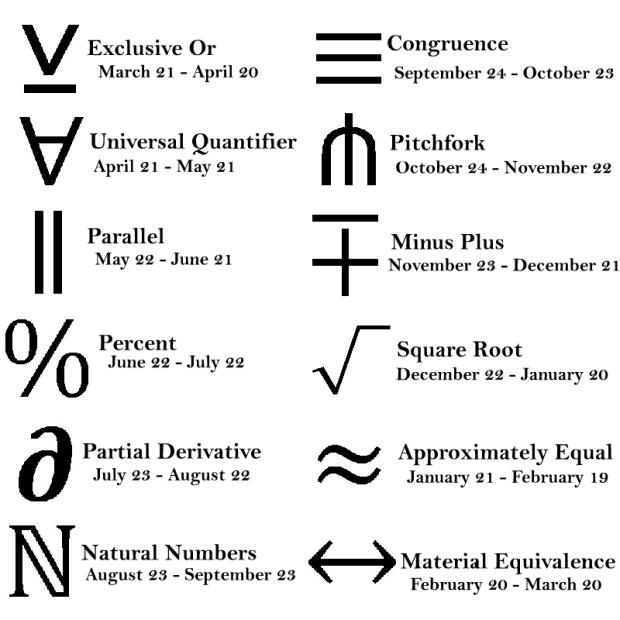
I wanted to find commonly-used math symbols that best matched the shape of the actual zodiac symbols to give you MATH ZODIAC, but for some of them I had to take a little artistic license. Virgo and Scorpio, I’m looking at you (yes, I just took Virgo’s “M” shape and made it an “N,” deal with it).
And for those of you screaming, “hey u cant mix mathz with pseudoscience SHAME lolz,” I say, “screw you.” Plus, now instead of saying “Taurus” when people ask you your sign, now you can reply “Universal Quantifier!” and confuse the hell out of them. Upturned A’s are cooler than bulls anyway.
Also, as I was waking up this morning, I swear I was trying to explain Euler’s Identity to my cat. Not sure how successful I was considering I was half asleep and she’s a cat.
Alright, it’s rant time
So I’m on Tumblr a lot. I like Tumblr because I can find fellow AH fanatics and not feel so weird about quoting Gavin Free to myself all the time I like to watch trends. I like to watch how certain things work their way around Tumblr and how quickly/slowly they do so.
There’s been one or two posts that have been going around lately that I would like to comment on, if y’all don’t mind.
(If you do mind, just skip this blog, ‘cause I’m gonna rant here anyway.)
(AGH TUMBLR IS DOWN WHY DO YOU FAIL ME WHEN I NEED YOU?!)
So I actually can’t pull up the posts at the moment like I wanted to (see above sentence), but the gist of them is this: people who do well under the implementation of our current educational methods (sit down and be lectured to, then take tests) aren’t actually learning and don’t actually know anything about the material they’re being taught. They’re just good at working the system. This whole thing links in with the opinion that GPA is just a measure of how well someone can work said system.
‘Kay, let’s pause for a moment.
I think most people who make this argument against the current most common delivery of information in our schools don’t think that people who just don’t do well in school are stupid and are incapable of learning. They just can’t work the system. They’re perfectly intelligent individuals who are fully capable of learning and retaining new info; they just don’t learn well when they’re forced to sit and listen to a teacher prattle on about something. Maybe they’d do better in a situation where they were able to watch active demonstrations of whatever material’s being taught (like a chemistry teacher throwing potassium in water rather than just talking about how/why doing so causes an explosion) or doing activities involving the material being taught (like actually throwing the K into the H2O themselves).
In fact, this is the whole idea behind different learning styles, is it not? Some people learn better one way, some people learn better another. It’s a perfectly reasonable assumption to make—not everyone gathers information in the same way.
So think about this for a second. If people all have different learning styles and we accept that a good number of people don’t learn best when sitting in a classroom and taking notes as a prof lectures, shouldn’t we also accept that there are likely people who do learn best in that environment? I mean, I know that schools across the globe don’t all follow this “students sit and listen to teacher talk” template, but you’ve got to think that such template wasn’t dreamt up by a bunch of people who sat around snickering “haha, let’s force students to follow this method even though it doesn’t work for anyone!” It was probably, at least in part, originally conceptualized by people who either learned best this way themselves or thought others did.
And it does work best for some people. I know that for a fact because I am one of those people. I learn best when I’m “forced” to listen to someone talk about the material. I have a very good aural memory. And like quite a lot of people, I remember stuff better when I’m exposed to it multiple times. That’s why I write stuff down during lecture. I hear the material, I write down the material, and the written stuff is there later if I need to refer to it. That works for me. I learn things that way. I’m the type of person for whom “they system” just works because it just so happens to match my learning style.
I know a lot of people for whom lectures aren’t very beneficial but labs really help them learn. I don’t usually retain stuff that’s taught in lab-like settings because when I get “hands on” with material, I like to do it alone and on my own time. Labs are stressful and they don’t help me learn. If our current educational system was all hands-on lab-based, I’d have to work extra super hard to retain anything ‘cause that’s just not the way my brain works.
So I guess what this meandering rant boils down to is this: for a lot of people, the current system may not be their ideal way to learn, and therefore some have probably developed ways to “work the system” and look like they’re doing well even if they’re not retaining anything past what’s necessary to earn them an A in a semester-long class. But for some people, maybe they’re not working the system at all—for them, the system just…works.
So please think of that next time you have the urge to assume that people who do well in school nowadays are just good at faking their way through.
[rant over; commencing Achievement Hunter video binge]
Holy Crapples
Oh my god.
There’s an article on Leibniz on Uncyclopedia.
The whole thing is a Leibniz/Newton slashfest.
- “He was born with extremely long and poofy hair, which he wore to bed every night and named ‘Poof.'”
- “The mathematician Isaac Newton fell in love with Leibniz when he discovered this divine hair, nicknaming him ‘Gotthair.'”
- “He enjoyed sex, tapdancing, walking his headdress, keeping frogs in his pocket, drinking, and keeping frogs in his headdress.”
- “Newton fell desperately in love with Leibniz, and ferociously stalked him. Leibniz, however, was not interested in Newton’s inferior and less poofy hair.”
- “Leibniz’s troubles of giving us this divine truth was due to the threat of Netwon’s sex drive. Leibniz was never able to sit down long enough to write more than a couple of pages before Newton found him again.”
- “Leibniz and Poof relentlessly attempted to avoid Newton’s calculus seduction, which began the series of violent battles known as the Calculus Wars.”
- “It has been theorized that Leibniz’s unique ability to rise from the dead is attributable to Poof’s power level being over 9,000!”
I AM LAUGHING SO HARD.
FWOOSH!
THERE I FIXED IT.
The process of getting this scanned and posted on DeviantArt took way more effort than it was worth.
TWSB: It’s Flippin’ Hot!
THIS
IS
THE
COOLEST
THING
EVER.
Are you ready to GET YO’ MIND BLOWN?
Okayokayokayokay. So you know how the earth’s magnetic field switches poles every so often? So does the sun’s!
The sun is currently at the peak of its 11 year solar cycle and is about to swap its north magnetic pole for its south and vice versa. According to Stanford University solar physicist Todd Hoeksema, the swapitself isn’t more than 3 to 4 months out. The north pole has actually already flipped; we’re just waiting on the south one to get its butt in gear and head to the opposite side.
So what does this mean for our solar system? What solar physicists focus on during this time is something called the “current sheet.” This is a surface that juts outward from the sun’s equator along which runs an electric current produced by the sun’s magnetic field. The current itself is small but the sheet is freaking huge, and it’s the thing that pretty much keeps the heliosphere (the sun’s magnetic influence) in check.
According to Phil Scherrer, another Stanford solar physicist, the sheet becomes really wavy and warped during a pole swap. So for us here on earth, as we zoom around in our orbit of the sun, we pass in and out of the sheet itself. This can cause disruptive “cosmic weather,” but the warped sheet actually offers the solar system better protection against cosmic rays.
Stanford’s Wilcox Solar Observatory has observed three such polar swaps since 1976. This will be the fourth.
HOW. COOL. IS. THAT. I freaking love the sun.
Video!

 Eigenblogger
