A year ago…
I defended my Master’s thesis.
That’s all I feel like saying today.
Internet Explorer Cannot Display This Blog
This list describes the “10 reasons Ph.D. students fail”, and it bugs the hell out of me.
Okay, I guess the list itself doesn’t bug me; the fact that the list contains the items it contains bugs me. Even had things been better in Vancouver in terms of…let’s just say “interpersonal relationships”…I probably still wouldn’t have stayed on for the Ph.D.
Why?
Read on, dear blog followers, and see all the reasons why I think the pursuit of a Ph.D. has been corrupted to the point where, in my opinion, it can no longer be considered a road to acquiring substantial knowledge of a specific subject and is instead a road to appeasing the “higher ups” in academia and a horribly misguided competition of who can get the most publications the fastest. PLEASE NOTE that while I’ll be ranting about this article, I’m not personally criticizing the author, Professor Matt Might, or his views/opinions. I agree with this list, actually. But like I said, it still pisses me off BECAUSE of its truth.
Professor Might thinks that a student can fail a Ph.D. if they:
1) Focus on grades or coursework. “During the first two years, students need to find an advisor, pick a research area, read a lot of papers and try small, exploratory research projects. Spending too much time on coursework distracts from these objectives.”
I disagree with this—in part. If coursework is so unimportant to the Ph.D. insanity, why do almost all Ph.D. programs require at least two or three classes? If taking classes truly detracts from research/reading/projects, why make it a requirement? Also, I think the importance of classes is underemphasized at the graduate level. I learned more in the seven or so classes I took in grad school than I did in the majority of undergrad (at least in statistics). ALSO also…shouldn’t the objective of a Ph.D. be “learning”?
2) Learn too much. “Some students go to Ph.D. school because they want to learn…but, it requires focused learning directed toward an eventual thesis. Taking (or sitting in on) non-required classes outside one’s focus is almost always a waste of time, and it’s always unnecessary.”
So in other words, learn only enough to get you to that peer-reviewed publication! Don’t waste your time with such frivolities like learning for learning’s sake or trying to expand your knowledge on your topic of choice by seeing how it relates to other areas of study! Don’t even bother with trying to get one step ahead on your subject matter by auditing/sitting in on a class that’s only slightly relevant to your specific project but may make what you’re studying easier to understand in general!
I took two classes in the statistics department that I didn’t need to take for my Master’s. In terms of being able to bend R to my will, one of them was the most useful class I took in the two years I was at UBC.
3) Expect perfection. “Perfectionism is a tragic affliction in academia, since it tends to hit the brightest the hardest.”
I think this is totally subjective. Some people work their best when they aim for perfection; others don’t.
4) Procrastinate. “Chronic perfectionists also tend to be procrastinators. So do eternal students with a drive to learn instead of research.”
I’ll talk about this one later.
5) Go rogue too soon/too late. “Going rogue before the student knows how to choose good topics and write well will end in wasted paper submissions and a grumpy advisor. On the other hand, continuing to act only when ordered to act past a certain point will strain an advisor that expects to start seeing a “return” on an investment of time and hard-won grant money.”
I understand the importance of this point, but not the reasoning behind it. Yes, it’s important to “break free” of your advisor at the appropriate time, but that time shouldn’t be based on grant money or number of publications or anything like that. As I’ve already mentioned, it should be about the learning process. The advisor/student relationship should develop and diverge when both parties feel that the student KNOWS enough to work more on their own, not when the student has PUBLISHED enough or the grant money is near depletion.
6) Treat Ph.D. school like school or work. “Ph.D. school is neither school nor work. Ph.D. school is a monastic experience. And, a jealous hobby. Solving problems and writing up papers well enough to pass peer review demands contemplative labor on days, nights and weekends.”
ASLdjfalgajfoifjdweojsagjafasf. The Ph.D. should not be school. It should not be work. It ALSO should not be “writing up papers well enough to pass peer review demands.” Yes, that’s important, especially in today’s hyper-competitive “if you’re not published you’re nobody” academic world (as sad as that is). But that’s NOT all a Ph.D. should be, and I think you’re screwing yourself over if you go in thinking that’s all there is to furthering your education.
7) Ignore the committee. “Another student I knew in grad school was told not to defend, based on the draft of his dissertation. He overruled his committee’s advice, and failed his defense. He was told to scrap his entire dissertaton and start over. It took him over ten years to finish his Ph.D.”
I can’t really assert my position on this point, as I had a fantastic committee with members who were super understanding of the circumstances surrounding my (slightly delayed) defense and who didn’t flip out and want my draft ten weeks prior to the defense. I think as long as you go to them and make clear what your plans are, then further discourse should be reasonable enough to avoid issues with the committee. Unless you get a bunch of jerks or something.
8) Aim too low. “This attitude guarantees that no professorship will be waiting for them.”
Or, more importantly, “this attitude guarantees that the student will not get out of the learning experience what one would hope one would gather from a 3-5 year stint in graduate school, or that it’s reflective of the fact that maybe they shouldn’t have chosen this educational path in [insert discipline here].” Again, I agree with the point, just not the reason behind it. Is the professorship the ONLY important thing one will get out of a Ph.D. program?
9) Aim too high. “It does not matter at all what you get your Ph.D. in. All that matters is that you get one. It’s the training that counts–not the topic.”
DISAGREEEEEE! Why in the hell would someone spend a good portion of their life pursuing a degree in a specific field while focusing on a single topic in that field that bores them to tears/annoys them to no end/makes them want to curl up in a ball and cry/makes them want to throw themselves off a bridge? How can the topic NOT matter? Of course I know that most Ph.D.s are not world-changing pieces of work that win Nobel Prizes, but should that be a reason for not selecting a topic that interests you? How does one not loathe the training if it is done so via a topic that doesn’t hold their interest? Sure, my research into fit indices used in structural equation modeling may not have saved the world from inevitable destruction, but (once I finally figured out what the hell I was doing) I enjoyed what I was studying. Plus, now I’m not finished with my Master’s and stranded alone without a topic of interest in my field of study.
10) Miss the REAL milestones. “Most schools require coursework, qualifiers, thesis proposal, thesis defense and dissertation. These are the requirements on paper. In practice, the real milestones are three good publications connected by a (perhaps loosely) unified theme.”
What about learning-/knowledge-related goals as the REAL milestones? Why shouldn’t “understanding the material well enough to consider yourself able to teach it to others” or “learning enough about the material to become excited about what you’re studying” considered milestones? They may not be as “practical,” but I don’t think that diminishes their importance. I also think such milestones are better in terms of avoiding burnout on your topic. If you’re focused solely on getting three publications under your belt, you’re probably much more likely to burn out than if you’re focused on truly understanding the material and becoming more enthusiastic about it.
[rant complete]
Eight Days Left, Half Way There
Hey, I formally graduate with my MA tomorrow. Snazzy.
That is all. It’s been a crappy day.
Some Days I Miss My Sanity. Other Days I’m Just a Toaster.
So my first week of Grad School: Take II has passed. I’m taking three classes and TA-ing an undergrad course. REVIEWS!
PHIL 9276: Philosophical Foundations of Modern Physics
Word for word on the syllabus: “Week 2: Newton vs. Leibniz.”
HELL.
YES.
PHIL 9606: Hume and Reid on Mental Representation
Next to the veritable demigod that is Leibniz, Hume is my favorite philosopher. I really like the way he tackled he idea of causality and how simply observing a “cause” action and then an “effect” action doesn’t necessarily guarantee that the cause actually CAUSED the effect.
Anyway, this class will involve reading a metric crap ton of Hume plus many of his critics, including Reid.
PHIL 9889: Environmental Philosophy
This is going to be a near exact repeat of my philosophy senior seminar at UI. Which I’m okay with, ’cause it was interesting stuff.
PHIL 2020: Basic Logic (TA)
Yay, logic! This is an undergrad class full of non-philosophy majors and is taught by a PhD student. Once we get to PhD level we’re allowed to actually teach classes; at the MA level we’re just graders/office-hour-holders. I’m hoping that since I’m TA-ing logic for both semesters now that I’ll be able to ask them to actually let me teach it next year, ‘cause I think it would probably be one of the better classes for me to teach given my background.
Cool, huh?
Defining the next four years of my life
CRAP I hate applying for funding. For the Ontario Graduate Scholarship, we basically have to write a proposal detailing our research focus for the next four years (PhD). The problem is, we’re not even supposed to pick an area of emphasis until this coming April. But it’s a good thing, I think. It’s forcing me to actually think about exactly what I want to do with my philosophy degree.
What I’m really interested in, thanks to my thesis work, are the philosophical ramifications of assessing model fit, particularly in structural equation modeling (‘cause it’s what I’m most familiar with now), but also in things like factor analysis and regression. What are the best methods to determine appropriate model fit? Should a fit index show better fit for a model with two factors when the factors are nearly orthogonal but the observable variables are all somewhat equally correlated, or should a fit index show better fit for a model with two factors that are more closely correlated but whose observable variables are more correlationally (is that a word?) separated between the two factors? What components of a model should weigh most heavily when determining model fit? Is there an “ideal” index in that sense?
It might sound weird or obscure or pedantic or whatever, but it’s interesting to me. And I think it’s very important that we start looking at the philosophical side of statistics now that we’ve got the software to run mega simulations and Monte Carlos and number orgies and sexy graphs and…
Sorry.
I’m excited.
I love this school already
I don’t know how many of you guys follow Piled Higher and Deeper, a comic by Jorge Cham that is the most accurate portrayal of graduate life I’ve ever seen*, but they’re making a live-action movie of it and it’s screening here at UWO on the 23rd.
How freaking cool is that?!
Also, I’m TA-ing PHIL 2020, Basic Logic, class this semester, which is pretty snazzy considering we have to pass a logic competencey exam in our first year of PhD and this will do for a good refresher. Shout-out to Dr. O’Rourke for being an amazing teacher and making logic accessible to me, someone who had no intuitive grasp of proofs prior to the course.
Yay!
*examples from UBC: trying to teach correlation to undergrads, explaining what you’re studying, emailing, and “this might as well have been a screenshot of my compy”
Yes, it took me this long to find my camera cord
Hey!
I walked around campus a bit more this afternoon and got some pics. Then I walked south, though not far enough to get to downtown, and captured a few more pics. Observe London and UWO! Clicky for large size.

Outside the front of my dorm.

The library.

The main drag, Oxford Lane.

The other main drag, Western Road.

Coat of Arms
.

Downtown on Oxford Street.
My new place
WOO, apartment completely unpacked and organized! Want to see some pics? Of course you do!
Keep in mind that this is technically a dorm room.

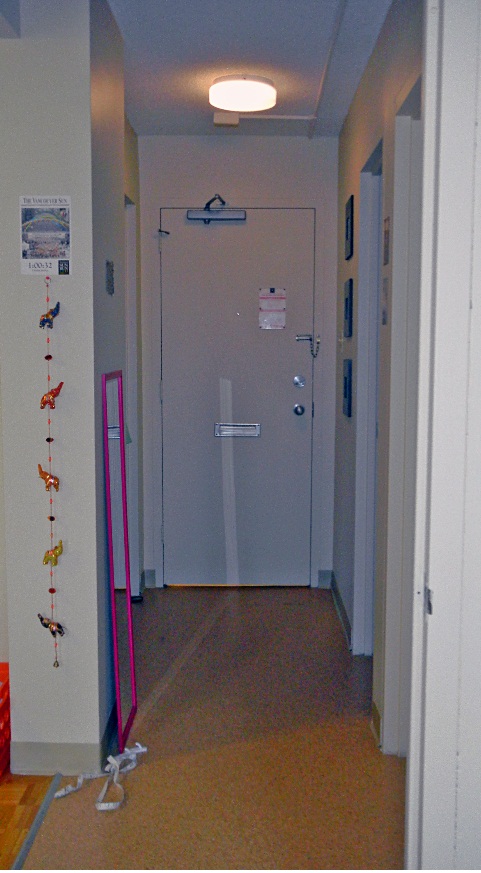
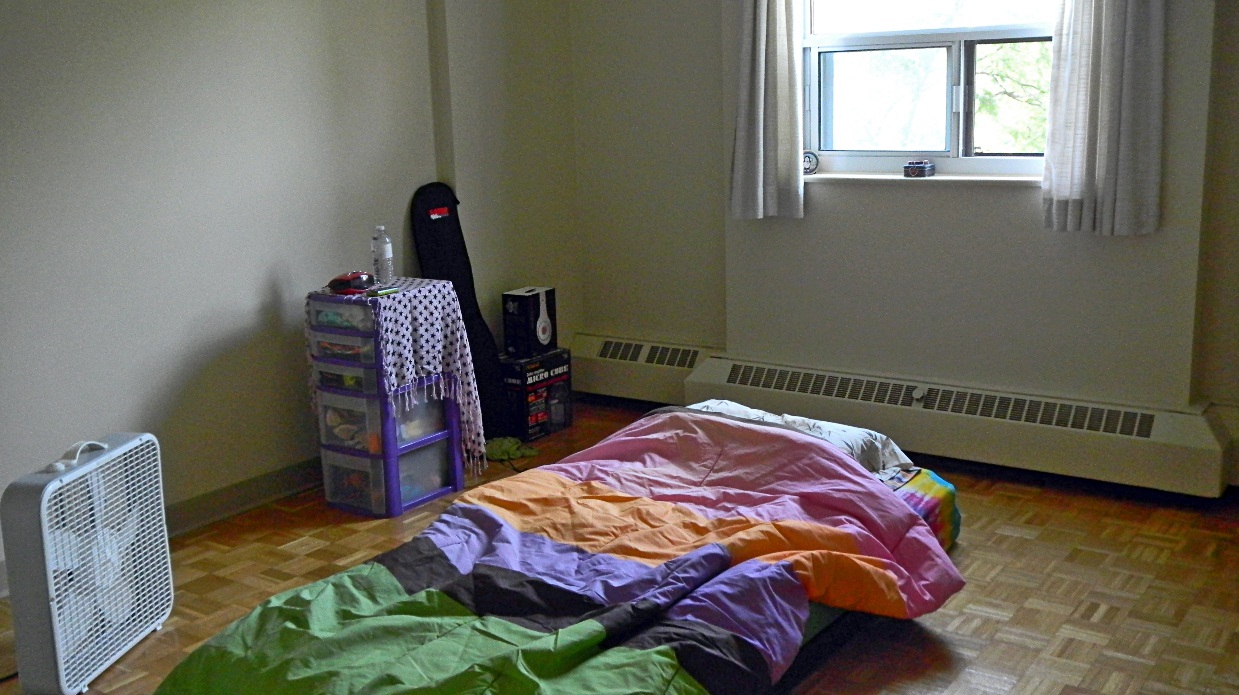
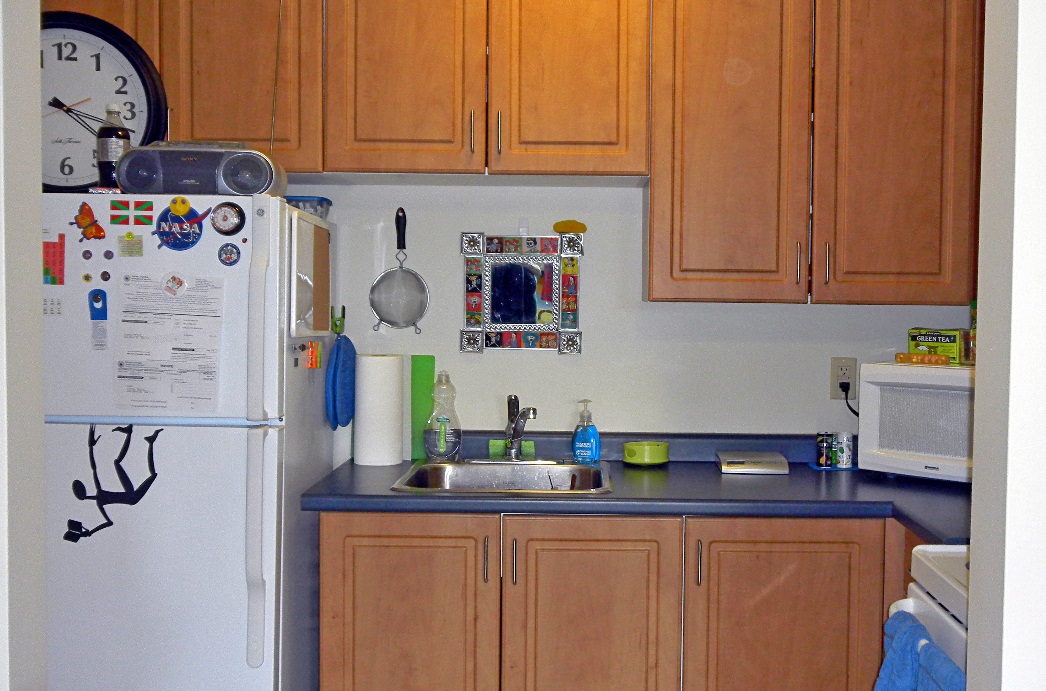
Also this:

You gotta love Canada.
We’re in ON!
WOOHOO, we finally made it!
My mom and I got to London this afternoon (no trouble at the border, though my student visa is going to be a pain), drove around, found my dorm, unloaded all my crap in seemingly record time, experienced the wonder that is the Real Canadian Superstore yet again, got a desk at WalMart, and are now hanging out in my dorm room. Which, by the way, seems nothing like a dorm room and more like my old apartment.
I like it here so far.
Pictures to come whenever I get everything organized and find my camera cable.
Dudes…
So I’ve finally come to the realization that I’m going to be moving halfway across the continent and am probably not returning in a long while. I’ll be in freaking Eastern Time, yo. I’ll be living surrounded by Great Lakes (and, well, Canadians, but that’s nothing new now). Scary stuff. At least for me.
Sorry, I’m in full freak-out mode and thus don’t have much to say. See you tomorrow!
SO EXCITED
SO!
Here are the classes I’m probably going to take at Western this semester and next. The MA is only a year-long thing there, so at the end of next summer I’ll be done with that and going onto the PhD, assuming everything goes well. For the MA, we need to take six half-courses in total.
Here are the ones I’m wanting:
Fall semester:
Philosophy 9276A: Philosophical Foundations of Modern Physics
“This seminar will examine the background to contemporary physics, particularly emphasizing two aspects: the philosophical views of space, time, and matter that were part of classical physics, and the views of the nature of scientific theory in general– in particular, of the roles of theory and experience, and the relations between mathematical structure and physical reality– that informed, and were informed by, developments in physics. Authors to be discussed include Newton, Leibniz, Euler, Kant, Helmholtz, Maxwell, Duhem, Mach, Poincaré, Einstein, Heisenberg, Schlick, Carnap, and others.”
Philosophy 9606A: Hume and Reid on Mental Representation
“This course will focus on Hume’s and Reid’s contrasting accounts of the foundations of knowledge and the workings of the mind.”
Philosophy 4993F/9889A: Environmental Philosophy
“This course in environmental philosophy explores some ethical and epistemological issues that arise in the contexts of conservation and restoration ecology. We commonly ear that we ought to preserve biodiversity. What are the moral justifications for such a widely accepted normative claim? Finally, this course will also look into the issue of unpredictability. Scientific and applied ecology were for a long time deeply influenced by an equilibrium paradigm in which nature was conceived of as balanced and predictable. But in the 1970s, ecologists started challenged this view and now endorse what some call a “non-equilibrium” view of nature. We will reflect on this new ecology and how it can affect the way in which policy makers and ecologists approach ecological management.”
Spring semester:
Philosophy 9277B: Philosophy of Probability
“This course is an introduction to philosophical issues connected with probability. Emphasis will be on the strengths and limitations of a probabilistic approach to confirmation in science. Topics will include interpretations of probability, Bayesian reasoning and its relation to classical statistical inference, how to understand conditional probability, and application of probabilistic reasoning to case studies in science.”
Philosophy 9279B: Science and Values
“This seminar considers the roles of values in science from four angles: (1) Values in scientific epistemology: heuristics and pragmatics; (2) Whose science is it?: authority, governance and ownership in science; (3) Scientific communication and moral life: trust, testimony, and obligation; (4) Choices: goals, risks, and the aims of science.”
Philosophy 9608B: Consciousness
“We will consider several philosophical theories of consciousness, including the HOT theory, AIR theory, multiple drafts, and dual aspect theory. We will also consider the role of science in explaining consciousness.”
Cool, huh?
Oh hey look, I forgot I had a future
I can’t freaking wait for Western Ontario, dudes. The fact that there’s a whole class on the philosophy of probability is amaaaaaaazing.
Other things I’m excited about:
– getting back into a music class/program/band/something.
– moving back into a dorm. I know that sounds dorky, but I’ll have wireless back and not have an hour-long commute to campus.
– not being in Vancouver.
– not having a soul-crushing depression hanging over every second of my existence. Hopefully.
– getting away from the West Coast.
– cheaper EVERYTHING.
– getting paid to talk about/think about/write about/dink around with the philosophy of science.
– reading through the Philosophy of Science Comprehensive Exam study guide, which includes Kuhn, Popper, Curd & Cover’s anthology, and like 50 other sexy texts.
– possibly owning a car.
YAY.
OH THANK YOU COSMOS
HOLY SHIT IT’S OVER.
I successfully defended my thesis this afternoon. Received a nice high grade and was told it was PhD-level work.
Relief level: beyond belief.
Sanity level: depleted, but recharging slowly.
To-do list for the next few days: absolutely nothing, except incessant Fallout playing.
My revisions are limited to typos and a few additional references to check out, then I’m set to turn it in to Grad Studies and get it out there.
I’m going to go do something mindless for awhile. Because I finally can.
Longer entry on thesis conclusion to come later, promise.
Jitters vs. Insanity
Kill me now. I honestly don’t know if I’ll make it through tomorrow.
Party at Claudia’s
Anybody want to come to a party at my house tonight? We’ll be talking about structural equation modeling. Model fit, in particular.
My poor mother will have to undergo three semesters’ worth of math and stats in about half an hour so she can be caught up on my research
to follow my defense presentation enough to be able to ask questions.
The fact that she agreed to do this is one of like five billion reasons why I love her.
Anyway, you all should come. There will be a huge whiteboard and a lot of lambdas.

Be there or be square.
A Wild Thesis Appears!
Thesis = done.
It shall be turned in tomorrow.
Right now I’m going to not do anything productive (read: play Fallout and not work on my defense slides) and maybe clean.
Due to yesterday’s events, my mom shall be coming up here tomorrow.
Thank god.
In This Blog: My Data Look like a Napkin Swan
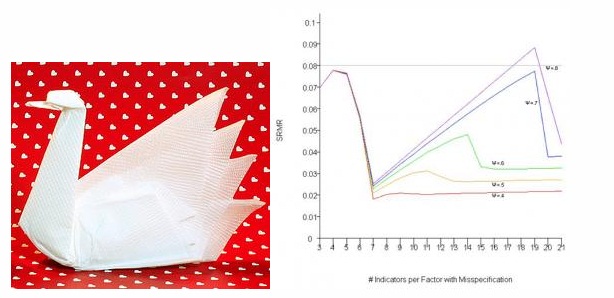
Seriously, standardized root mean square residual? Seriously?
This pattern makes absolutely no sense. It’s pretty, but it makes absolutely no sense.
I feel like this plot should be on Maury or something. “When Bad Patterns Happen to Good Data.”
I’d totally watch that.
June 22nd
A month from now, I will be defending my thesis.
Scared all to hell.
Yeah.
I feel crappy
Solution: apartment temperature cranked to 78 degrees, Top Chef, making pretty graphs for my thesis, and not going to campus.
Why isn’t there a MyLifeIsPathetic.com yet?
Nostalgia, go away
I am so ridiculously homesick right now it’s scary.
I’m a solitary person, but I’m not a fan of being completely alone for months on end.
I’m tired of this dumb thesis, I’m tired of this dumb city, and I just want one day free of anxiety attacks.
I’m also freezing cold right now and can’t concentrate.
Is 2011 kicking my ass? It’s certainly trying to.
Sorry my blogs suck.
Sorry I suck.
Something else
Yaaaaay, my mom is here! Actually, she got here yesterday but it was late and she was tired but I had a minor mental breakdown and we ended up going to Denny’s at 11 PM and then drove around Stanley Park for another hour before we went home and crashed after M&Ms.
(Run on sentences make me look cool, yo.)
Today I unfortunately have a lot of school-related crap work to do today, but tomorrow we’re both taking the day off and screwing around. I’m taking her to Metropolis, a mall that could swallow about 30 Palouse Malls (not kidding) so we can take our minds off of our current situations, both of which suck.
I freaking love my mom, this is going to be awesome.

 Eigenblogger