So if you recall, not too long ago I analyzed whether the frequencies of letters in the English language change depending on the letter of the word. To do so, I gathered about 5,000 English words and compared the frequency distributions of the letters for the first five letters of the words. Click here to check that out if you haven’t already done so.
I’d wanted to go further into the words, but I didn’t have time/data to do so.
So that’s what I did today!
I pulled large samples of 4-, 5-, 6-, 7-, 8-, and 9-letter words from an online Scrabble dictionary*. For each sample, I went through and found the frequency distribution of the 26 letters of the alphabet for each letter place in the word (e.g., for the 4-letter words, I found the frequency distribution of the 26 letters for the first, second, third, and fourth place in the 4-letter word).
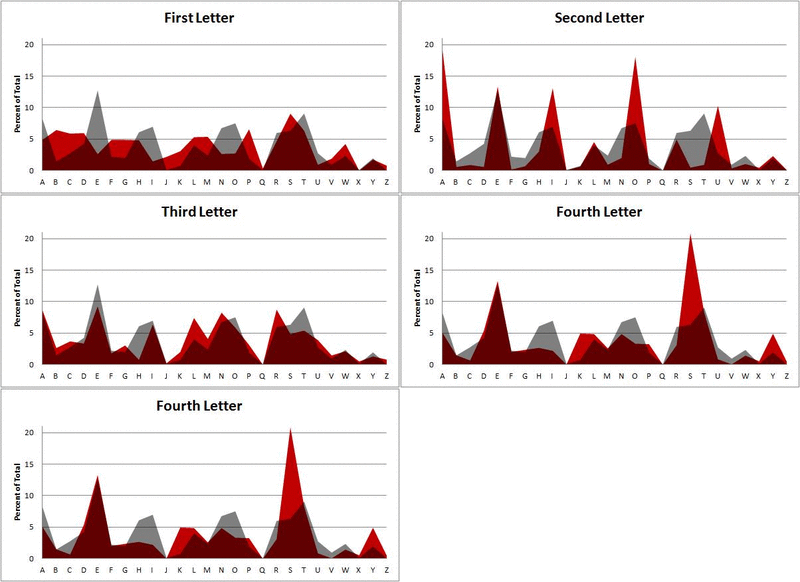
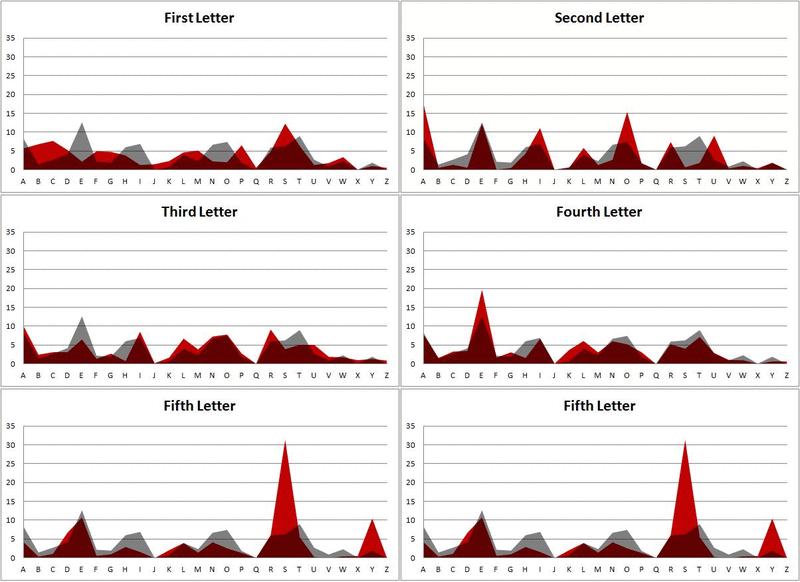
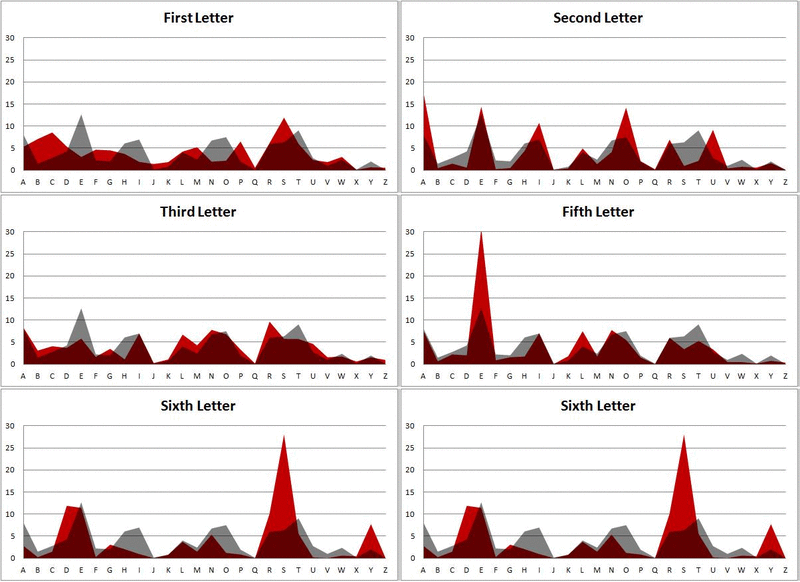
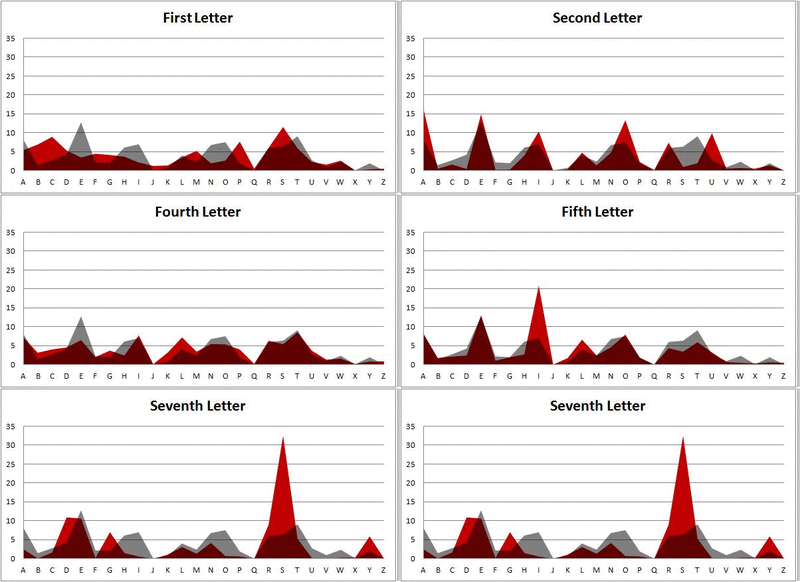
Because I think something like this is something that requires some sort of visual, I made a gif for each word size (4, 5, 6, 7, 8, 9 letters) that compares the letter frequency for each letter place in the word (in red) compared to the overall frequency of the letters in the entirety of the English language (grey). Check them all out and see if you notice a pattern as the gifs progress through the letter places in the words.
Four-letter words:
Five-letter words:
Six-letter words:
Seven-letter words:
Eight-letter words:
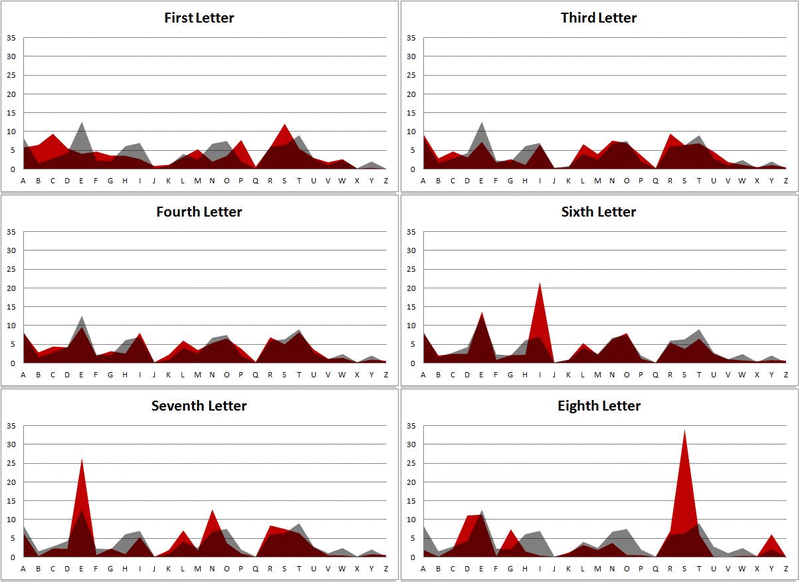
Nine-letter words:
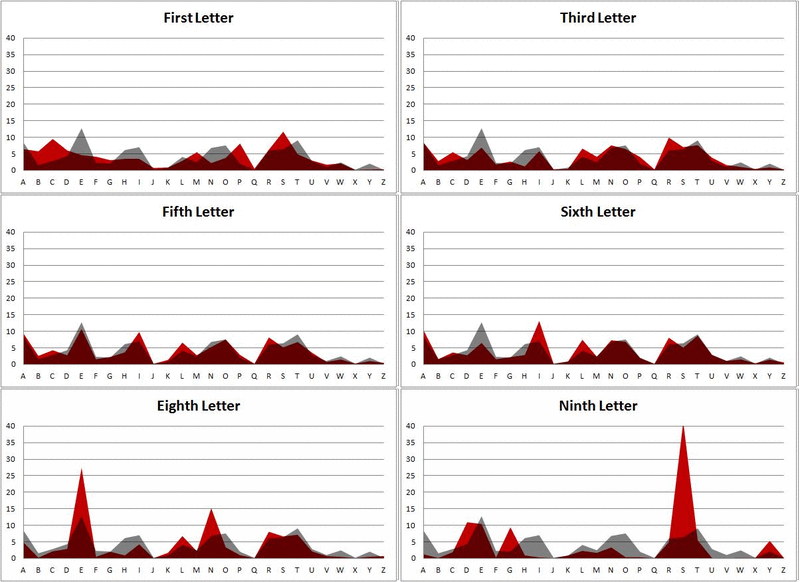
Did you notice it? Regardless of word size, the letter frequencies were most different from the overall frequency in the English language near the beginning and end of the words. Near the “middle” of the words (like the fourth and fifth letters of the nine-letter words, for example), the letter frequencies best matched the overall frequency in the English language (that is, the red distribution best matched the grey distribution).
In addition to the graphical aspect, I of course worked this out with numbers. Like last time, I measured “error” as the absolute value of the total difference between the red and grey distributions for each letter of each word. This confirmed what the gifs show: the smallest error was always for the one or two letters in the “middle” of each word, regardless of size.
Pretty damn cool, huh?
FYI, the six gifs sync and “restart” at the same time every 2,520 frames, in case you’re one of those people who wonders about those types of things.
*Yes, I realize the use of a Scrabble dictionary skews the results a bit, considering that plurals are included in the dictionary as well (notice the “S” is really frequent for the last letter in all cases). But plurals are words, after all, so I figured I’d include them anyway. The pattern still exists anyway even if you omit the last letter from all gifs.

 Eigenblogger
Language and the science behind it are really fascinating when you look at it.
LikeLike